Hello. I'm writer Antoinette Beard/Sorelle Sucere... WOO-HOO!!!... Here are quirky fascinations of the Victorian to the Edwardian age, and some things that happened later that were just too bizarre to resist... Such a yummy time of quaintness & blossoming industry. Scroll down for a multitude of coolness... Ha-ha-ha, always there are those who flaunt conventions, Darlings... ;)
Tuesday, September 3, 2024
Monday, September 2, 2024
Peace Rose, ~ "Heirloom Roses"...
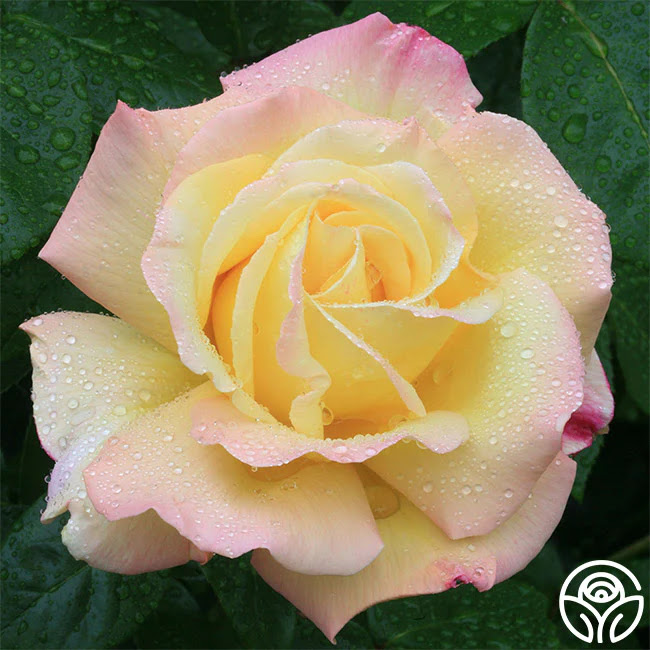
With beautiful, large, heavy cupped to high-centered, 6" blooms, Peace steals the show. Her golden, primrose-yellow petals with soft, rose-pink shadings emit an intense scent. Own-root roses ensure this strong, continually blooming bush with large, rich-green, leathery foliage will be more winter hardy year after year and more disease resistant.
Among The Most Haunted Places In the U.S.A., ~ By Lisa Poirot...
Bonaventure Cemetery
Location: Savannah, Georgia
Date founded: 1846 >>>
Nestled beneath the moss-draped oaks of Savannah, Georgia, the Bonaventure Cemetery is a serene yet haunting masterpiece of history and art. With its elegantly weathered tombstones and ornate sculptures, this resting place is more than just a cemetery – it’s a journey through time. As you wander the winding paths, the stories of the departed come alive, from celebrated poets to soldiers of wars long past.
The Southern Gothic beauty of the cemetery’s architecture is heightened by Spanish moss, creating an atmosphere that is both enchanting and chilling. For this reason, the cemetery has been featured in various films and literature, most notably the book and subsequent movie, “Midnight in the Garden of Good and Evil.” Playing a pivotal role in the story’s backdrop of mystery and intrigue, Bonaventure has quite a reputation as a haunting and enchanting place.
Saturday, August 31, 2024
Friday, August 30, 2024
Hell's Half Acre, ~ The Brothels In Fort Worth...
A Fine Louisiana Gumbo!!!... (Maybe you could get this kind of thing at Lulu White's, if Juliette Jo was cooking!!! ;) )
Lulu White's Mahogany Hall...
Shrimp & Sausage Gumbo
By Rian Handler and Justin SullivanUpdated: Jan 3, 2024 >>>
Homemade Gumbo Is The Ultimate Comfort Food Dish...
Yields:
4 serving(s)
Prep Time:
20 mins
Total Time:
1 hr 20 mins
Cal/Serv:
633
>>>
Filled with shrimp, sausage, and the signature seasoning, hearty gumbo the true melting-pot dish that will transport you straight to New Orleans after just one bite. Originating in Louisiana, this dish combines the cuisines and ingredients of several cultures including West African, French, German, and Choctaw. It's a top-notch comfort food stew centered around a flavorful roux and the holy trinity of Southern cooking: aromatic onions, celery, and bell peppers.
Our recipe draws inspiration from Cajun and Creole styles of gumbo, but mainly follows the Creole style with the inclusion of fire-roasted tomatoes and shrimp. If you're looking to perfect this classic dish, keep reading for all of our top tips on how to do it:
What’s the difference between gumbo and jambalaya?...
The difference in these two dishes comes down to two things: the roux and the role of the rice. Unlike jambalaya, gumbo builds its flavor upon a roux, which also thickens it to a stew-like texture. Gumbo is also served with rice on the side, while jambalaya simmers it in the dish. >>>
The secret to the best gumbo: the roux...
Every good gumbo starts with a mixture of butter and flour called a roux. In this case, we’re cooking the roux until it has a golden color, which can take about 10 minutes. Our top tip? During this time, you should be stirring almost constantly. It’s very easy to burn a roux, and if you do, then you have to start over. If that happens, that’s okay! It takes some practice if this is your first time making a roux, but stirring constantly will help prevent any burning from happening in the first place. >>>
What meat or seafood is usually in gumbo?...
The protein can vary in different gumbo recipes but for our recipe, we chose a mix of andouille sausage and shrimp. Some tips when it comes to these star ingredients:
— The shrimp. It's really up to you if you prefer to keep your shrimp shells on or not. The shells add heaps of flavor, so oftentimes we prefer to keep them on, but if eating tail-on shrimp isn’t your thing, no worries! Leave 'em out. In terms of size, it doesn’t really matter how big your shrimp are, just make sure to keep a close eye on them as they cook. As soon as they turn opaque, they’re done. As always, make sure you're buying sustainably—the Monterey Bay Aquarium has an amazing guide that can walk you through purchasing shrimp ethically. Not feeling shrimp? Try our chicken and sausage gumbo instead.
— The sausage. Trust us, for this recipe, it’s truly worth it to find andouille. It provides a very specific flavor associated with this dish, so it’s really worth hunting for. If you can’t find andouille anywhere, there are ways to substitute the flavor. Start with ground pork and mix in Cajun spices. Since andouille is double-smoked, try adding a little liquid smoke to the mix. We’d start small, 1/2 teaspoon should do it. >>>
How to serve gumbo:
Gumbo is often traditionally served spooned over rice, and we chose to top our bowls with our reserved scallions. If you’re looking for side ideas, you can’t go wrong with fried okra, collard greens, cheese grits, or sweet potato tots. >>>
Storage and freezing:
Since there is seafood in this dish, we don't recommend refrigerating gumbo for more than 2 days. You can also freeze your gumbo for up to 6 months. The cooked rice can be stored separately in the fridge for up to 2 days, and frozen separately for up to 1 month. >>>
>>>
Ingredients
4 Tbsp. unsalted butter
1/4 c. all-purpose flour
1 small yellow onion, chopped
1 medium green bell pepper, seeds and ribs removed, chopped
2 stalks celery, finely sliced
12 oz. andouille sausage, sliced into 1/2" rounds
2 cloves garlic, finely chopped
1 Tbsp. Cajun seasoning (without salt)
Kosher salt
Freshly ground black pepper
4 c. low-sodium chicken broth
1 (15-oz.) can fire-roasted diced tomatoes
1 bay leaf
1 lb. medium shrimp, peeled, deveined
3 scallions, sliced
Cooked white rice, for serving >>>
Directions...
Step 1 ~
In a large, deep skillet over medium-low heat, melt butter, then add flour. Cook, stirring constantly, until roux is dark caramel colored, 12 to 15 minutes.
Step ~
Add onions, peppers, and celery and cook, stirring, until softened, about 8 minutes. Stir in sausage, garlic, and Cajun seasoning; season with salt and pepper. Stir in broth, tomatoes, and bay leaf and bring to a boil. Reduce heat to low and simmer, stirring occasionally, until thickened, about 1 hour.
Step 3 ~
In the last 6 minutes of cooking, add shrimp. Once shrimp is pink and cooked through, taste and adjust seasonings. Stir in scallions, reserving some for serving.
Step 4 ~
Divide rice among bowls. Spoon gumbo over. Top with reserved scallions.
Thursday, August 29, 2024
Tuesday, August 27, 2024
The Saucy Sweethearts Of Storyville: Prologue...
Charlezza loved the backwoods around Catfish Creek where she had grown up, romping like a little wild animal, among the trees, wearing only a coarse sack-like shift. But, she also loved the cypress shack with it's tin roof, where her mama Annie Lee and her Grand Tante Narcisse had raised her, raised her on lots of love and corn cakes, gravy, yams, grits, poke sallet greens and, of course, river catfish.
Now, at seven years old, and already bright enough to be reading Grand Tante's notebooks where she recorded her hoodoo spells and potion recipes, Charlezza was playing with her ragdoll Sooky and her chubby puppy Lolly. Lolly was chasing her tail and that made Charlezza laugh and laugh and laugh.
"That silly little dog gonna get dizzy and fall over her own ears!," Grand Tante Narcisse said.
"No, she won't! She's too smart for that! I housebroke her in three days, remember!"
"I remember. I tole you I wasn't gonna have no dog pissing all over my floor." Grand Tante Narcisse was tying bundles of mint and rosemary for drying. "Your mama be home soon. She works too much for that scum Edna Baylis. Edna can clean her own house, but she just likes yer mama doin' it, acting like her servant. I done tole your mama, and tole her, I gots plenty enough money to support us all, but your mama is proud like a goose, and won't hear of it!"
"I know, I know, Grand Tante, but you say you got a lot of money, but where is it?"
"Ain't nobody gonna find that out, Chile!" Grand Tante Narcisse laughed. When she laughed she sounded like a crow, Charlezza thought.
The door opened and Annie Lee walked in. She looked tired, as usual, but on her sweet face was only a smile. Annie Lee's hair was yellow and even a bit nappy, which was strange since she was so light; Annie's eyes were even pale blue. Yet, her mixed blood showed in her other features too. Annie Lee was called "Angel Annie" by some in the Parish for her good works. Annie Lee was a soft touch for anyone. She couldn't bear the thought of old people starving to death or children crying because they didn't have enough blankets, or even stray dogs and cats suffering just a smidgen. She even fed scraps to raccoons and possums, saying they were God's furry kids.
There was only Grand Tante Narcisse, Annie Lee and Charlezza living in Grand Tante's shack. Grand Tante Narcisse had been a great beauty in her youth, with her strange, yet fine silvery green eyes, and had had a "career" of some sorts. She wouldn't say what it was, naturally, but now, she was a hoodoo woman, a conjure woman. People came to see Mama Narcisse La Velle late at night, knocking softly on the back door. Grand Tante Narcisse would admit them. She would talk to these "customers" in a very soft voice, and the customers would answer back as if the devil was looking over their shoulders. Small cloth wrapped bundles and candles would hastily be exchanged for wads of crumpled bills, or precious old jewelry, or handfuls of coins. Then, the customers would scurry away... Charlezza had watched this happen many times, from her rickety cot made of live oak branches, with the covers pulled up almost to her wide eyes. And, she knew to never touch her grand tante's hoodoo altar with it's weird little statues and it's rocks and shells and bits of bones and feathers.
Lazy days went on and on and on, and Charlezza grew into a very pretty girl with an active curiosity, almost as pretty a girl as Annie Lee and Grand Tante Narcisse had been. Then, one day, Charlezza decided to see the mysterious world out there, with her best friend Rae Mae Placer, who said with the right connections she and Charlezza could be queens! The right connections, ~ ha, two naive backwoods girls? That was a big, a very big mistake!
~ Copyright by Antoinette Beard, 2024.
Storyville: From "Noir & NOLA"...
By Cierra Chenier,
Mar 19, 2018 >>>
"From Basin to Backatown: The Untold Story of Storyville"...
In Storyville, New Orleans...
Basin Street parallels Rampart Street and neighbors the historic French Quarter and St. Louis Cemetery #1. Before Hurricane Katrina, it was the site of the former Iberville Housing Projects (now mixed-income apartments) and carries an even deeper history as the site of New Orleans’ “red-light” district. Every area in New Orleans has a story, here is that of Storyville. >>>
Background...
After many failed attempts to eradicate prostitution and gambling within the city, the New Orleans City Council adopted an ordinance in 1897. Ordinance No. 13, 485 C.S. was introduced by Alderman Sidney Story and contained a list of guidelines to regulate prostitution and other illegal acts. It designated thirty-eight blocks where prostitution was technically tolerated, but illegal in any other part of the city. The area became known as the "red-light district" and "Storyville" after Sidney Story. It stretched throughout Basin Street, beginning at the former Basin Street Railroad. The district was located at the current site of the Iberville Housing Projects.
Storyville employed over 2,000 prostitutes and generated millions of dollars in economic activity. It attracted people from all over the country and served as a playground for prostitution, gambling, segregation, music, drugs, alcohol, and racial and sexual exploitation. Storyville was New Orleans' attempt to contain crude and illegal activity into one area (making it easier for police to regulate) rather than trying to address these issues city-wide. It was lined with mansions, saloons, and brothels, in which these illicit activities would take place. Blue books, known as the "guidebooks to sin," were booklets that advertised the activity of Storyville and served as a directory for the prostitutes and "madames" of the district, many of whom were categorized by race.
"W" for white, "C" for colored, and "Oct." for octoroon, meaning one-eighth Black. Black women, especially those that were dark-skinned or visibly Black, were deemed as the least valuable women in Storyville. They often worked in deplorable conditions and were the subject of exploitation. Many light-skinned, mixed race, and/or Creole women worked at Lulu White's Mahogany Hall, a luxurious parlor occupied by rich, white men that (creepily) fetishized the racial ambiguity of these wome
Segregation...
Your race determined your positioning within Storyville. The white "parlors," were mansions known as the high-end brothels (Basin to S. Liberty Street). Lower-end brothels contained a mix of races (S. Liberty to N. Villere Street). The Black, "colored area" consisted of run-down brothels known as "cribs," and were located closer to the cemetery, away from the main action of the district. Although Black and white brothels coexisted in Storyville, Black prostitutes were not allowed in the predominately white sections unless they were working. Black men were not allowed in the white establishments unless they were musicians brought in to perform. In other words: if you were Black, you were only deemed useful if you were providing a form of service or entertainment.
Basin Street lies just outside of the Tremé neighborhood, which is known as the birthplace of jazz. Consequently, it was common for Black jazz musicians to play in white brothels as a form of entertainment. While jazz did not originate in Storyville, Storyville certainly played a role in the development of jazz, since Black artists were not allowed to perform in other white clubs in the city. Many famous jazz players got their start in the brothels of Storyville, including Jelly Roll Morton, Joe "King" Oliver, Buddy Bolden, even a young Louis Armstrong made money by bringing coal to the brothels within the district.
Backatown...
Another ordinance was proposed, which required all Black prostitutes to move in a separate "vice" district across Canal Street. This red-light district became known as the "Black Storyville," what we know today as "Backatown." This area was just down the street from Storyville, right across Canal, near present-day City Hall. Louis Armstrong grew up in Backatown, or "Black Storyville," and ultimately became the most influential figure in jazz music. Black organizations grew upset that Fisk school was located in "Black Storyville." Louis Armstrong, a student at Fisk, expressed how the school was in the midst of saloons and brothels. In result, the school board decided to move the Black students of Fisk to McDonogh 13, an all-white school on the outskirts of the district, and convert it to a Black school. White parents were outraged, protests followed, but the school board followed through with the decision. The school was renamed McDonogh No. 35 and became the first Black high school in New Orleans.
Farewell, Storyville...
As years passed, many attempts were made to eliminate Storyville: a ban on musical instruments inside of saloons, on women in establishments that only sold alcohol, and on Black and white people drinking together. At the beginning of World War I, prostitution districts within five miles of an American military base were strictly prohibited, resulting in the complete shut down of Storyville. The jazz musicians made an exodus to Chicago, which became the next step in jazz evolution. Most of the former brothels, saloons, and parlors were torn down, and the Iberville Housing Projects were built in its place with federal funding from the Housing Act of 1937. This program was segregated, in which only white residents (families of military soldiers) were permitted to live in the Iberville...
The Lafitte Projects, across Claiborne, were built in 1941 and only housed Black residents. At the time, the Lafitte is said to have been one of the best low-rent projects for Black people in the South.
>>> The history Storyville is often brushed under the rug due to the behaviors associated with it. While it was obscene and technically illegal, the district generated much of the city's tourism revenue during the time period. Tourists flocked to the lewd streets of Storyville, just as they do today on Bourbon Street. Without Storyville, we may not have heard the names of those notable jazz musicians, and that young boy dropping off coal may not have ever met his mentor, Joe "King" Oliver, and grew up to become THE Louis Armstrong. The politics of Storyville parallels many of the issues we see today, whether we're talking racism, colorism, segregation, or the exploitation of Black women.
The issues that plagued the Storyville district in the late 1800s continue to plague our communities in various forms today. From Basin, to Backatown–from the Iberville, to the Lafitte. To understand our history is to understand our connectedness to each other. New Orleans is close-knit, family-oriented, and whether we realize it or not, we move as a unit. We are fused in more ways than we are divided, and it's about time we start acting like it....
>>> "Farewell to Storyville" - by Billie Holiday & Louis Armstrong...
"All, you old-time queens, from New Orleans, who lived in Storyville
You sang the blues, try to amuse, here's how they pay the bill
The law step-in and call it sin to have a little fun
The police car has made a stop and Storyville is done
[...]
Just say farewell now and get your one last thrill
Your one last thrill
Just say farewell now, farewell to Storyville."
Monday, August 26, 2024
Subscribe to:
Posts (Atom)


