A Victorian Lady's Darkest Fantasies, - from author Antoinette Beard...

Hello. I'm writer Antoinette Beard/Sorelle Sucere... WOO-HOO!!!... Here are quirky fascinations of the Victorian to the Edwardian age, and some things that happened later that were just too bizarre to resist... Such a yummy time of quaintness & blossoming industry. Scroll down for a multitude of coolness... Ha-ha-ha, always there are those who flaunt conventions, Darlings... ;)


Sunday, August 19, 2018

"The piano," [1993]: The Best Scene,--- [Such exquisite acting in such a beautiful and artistic film!!!]...

"
Posted by Suzanne La Force at 6:16 AM No comments:
Email ThisBlogThis!Share to XShare to FacebookShare to Pinterest

Friday, August 17, 2018

The Making Of The Movie, "The Piano,"...

Posted by Suzanne La Force at 7:06 AM No comments:
Email ThisBlogThis!Share to XShare to FacebookShare to Pinterest

"The Piano," --- [This stunningly beautiful and poetic, yet very quirky film won many awards. I LOVED IT!!!]...

Posted by Suzanne La Force at 7:00 AM No comments:
Email ThisBlogThis!Share to XShare to FacebookShare to Pinterest

Thursday, August 16, 2018

The Bold & Remarkable Nellie Bly...


Nellie Bly working in a factory producing boxes
At birth she was named Elizabeth Jane Cochran. She was born in "Cochran's Mills", now part of the Pittsburgh suburb of Burrell Township, Armstrong County, Pennsylvania. Her father, Michael Cochran, born about 1810, started out as a laborer and mill worker before buying the local mill and most of the land surrounding his family farmhouse. He later became a merchant, postmaster, and associate justice at Cochran's Mills (which was named after him) in Pennsylvania. Michael married twice. He had 10 children with his first wife, Catherine Murphy, and 5 more children, including Elizabeth, with his second wife, Mary Jane Kennedy. Michael Cochran's father had immigrated from County Londonderry, Ireland in the 1790s.
As a young girl Elizabeth often was called "Pinky" because she so frequently wore that color. As she became a teenager she wanted to portray herself as more sophisticated, and so dropped the nickname and changed her surname to "Cochrane".  She attended boarding school for one term, but after her father's death in 1870 or 1871, was forced to drop out due to lack of funds.
In 1880 Cochrane's mother moved her family to Pittsburgh. A newspaper column entitled "What Girls Are Good For" in the Pittsburgh Dispatch that reported that girls were principally for birthing children and keeping house prompted Elizabeth to write a response under the pseudonym "Lonely Orphan Girl". The editor, George Madden, was impressed with her passion and ran an advertisement asking the author to identify herself. When Cochrane introduced herself to the editor, he offered her the opportunity to write a piece for the newspaper, again under the pseudonym "Lonely Orphan Girl". Her first article for the Dispatch, entitled "The Girl Puzzle", was about how divorce affected women. In it, she argued for reform of divorce laws. Madden was impressed again and offered her a full-time job. It was customary for women who were newspaper writers at that time to use pen names. The editor chose "Nellie Bly", adopted from the title character in the popular song "Nelly Bly" by Stephen Foster. Cochrane originally intended that her pseudonym be "Nelly Bly", but her editor wrote "Nellie" by mistake and the error stuck.

Career

Pittsburgh Dispatch

As a writer, Bly focused her early work for the Pittsburgh Dispatch on the lives of working women, writing a series of investigative articles on women factory workers. However, the newspaper soon received complaints from factory owners about her writing, and she was reassigned to women's pages to cover fashion, society, and gardening, the usual role for women journalists, and she became dissatisfied. She then traveled to Mexico to serve as a foreign correspondent. Still only 21, she spent nearly half a year reporting the lives and customs of the Mexican people; her dispatches later were published in book form as Six Months in Mexico.[13] In one report, she protested the imprisonment of a local journalist for criticizing the Mexican government, then a dictatorship under Porfirio Díaz. When Mexican authorities learned of Bly's report, they threatened her with arrest, prompting her to flee the country. Safely home, she accused Díaz of being a tyrannical czar suppressing the Mexican people and controlling the press.

Asylum exposé

Bly being examined by a psychiatrist
Burdened again with theater and arts reporting, Bly left the Pittsburgh Dispatch in 1887 for New York City. Penniless after four months, she talked her way into the offices of Joseph Pulitzer's newspaper the New York World, and took an undercover assignment for which she agreed to feign insanity to investigate reports of brutality and neglect at the Women's Lunatic Asylum on Blackwell's Island.
Committed to the asylum, Bly experienced the deplorable conditions firsthand. After ten days, the asylum released Bly at The World's behest. Her report, later published in book form as Ten Days in a Mad-House, caused a sensation, prompted the asylum to implement reforms, and brought her lasting fame.

Around the world

A publicity photograph taken by the New York Worldnewspaper to promote Bly's around-the-world voyage
In 1888 Bly suggested to her editor at the New York World that she take a trip around the world, attempting to turn the fictional Around the World in Eighty Days into fact for the first time. A year later, at 9:40 a.m. on November 14, 1889, and with two days' notice, she boarded the Augusta Victoria, a steamer of the Hamburg America Line, and began her 40,070 kilometer journey.
She took with her the dress she was wearing, a sturdy overcoat, several changes of underwear, and a small travel bag carrying her toiletry essentials. She carried most of her money (£200 in English bank notes and gold, as well as some American currency) in a bag tied around her neck.
The New York newspaper Cosmopolitan sponsored its own reporter, Elizabeth Bisland, to beat the time of both Phileas Fogg and Bly. Bisland would travel the opposite way around the world, starting on the same day as Bly took off. To sustain interest in the story, the World organized a "Nellie Bly Guessing Match" in which readers were asked to estimate Bly's arrival time to the second, with the Grand Prize consisting at first of a free trip to Europe and, later on, spending money for the trip.
A woodcut image of Nellie Bly's homecoming reception in Jersey Cityprinted in Frank Leslie's Illustrated News on February 8, 1890.
During her travels around the world, Bly went through England, France (where she met Jules Verne in Amiens), Brindisi, the Suez Canal, Colombo (Ceylon), the Straits Settlements of Penang and Singapore, Hong Kong, and Japan. The development of efficient submarine cable networks and the electric telegraph allowed Bly to send short progress reports, although longer dispatches had to travel by regular post and thus were often delayed by several weeks.
Bly travelled using steamships and the existing railroad systems, which caused occasional setbacks, particularly on the Asian leg of her race.[27] During these stops, she visited a leper colony in China and, in Singapore, she bought a monkey.
As a result of rough weather on her Pacific crossing, she arrived in San Francisco on the White Star Line ship RMS Oceanic on January 21, two days behind schedule. However, after World owner Pulitzer chartered a private train to bring her home, she arrived back in New Jersey on January 25, 1890, at 3:51 pm.
Just over seventy-two days after her departure from Hoboken, Bly was back in New York. She had circumnavigated the globe, traveling alone for almost the entire journey.  Bisland was, at the time, still crossing the Atlantic, only to arrive in New York four and a half days later. She also had missed a connection and had to board a slow, old ship (the Bothnia) in the place of a fast ship (Etruria). Bly's journey was a world record, although it was bettered a few months later by George Francis Train, whose first circumnavigation in 1870 possibly had been the inspiration for Verne's novel. Train completed the journey in 67 days, and on his third trip in 1892 in 60 days. By 1913, Andre Jaeger-Schmidt, Henry Frederick, and John Henry Mears had improved on the record, the latter completing the journey in fewer than 36 days.

Later work

Patent for an improved Milk-Can
In 1904 Iron Clad began manufacturing the steel barrel that was the model for the 55-gallon oil drum still in widespread use in the United States. Although there have been spurious claims that Bly invented the barrel, the actual inventor is Henry Wehrhahn. (U.S. Patents 808,327 and 808,413).
Bly was, however, an inventor in her own right.

Personal life and death

In 1895, Bly married millionaire manufacturer Robert Seaman. Bly was 31 and Seaman was 73 when they married. Due to her husband's failing health, she retired from journalism and succeeded her husband as head of the Iron Clad Manufacturing Co., which made steel containers such as milk cans and boilers. In 1904, Seaman died.
Bly died of pneumonia at St. Mark's Hospital in New York City in 1922 at age 57. She was interred in a modest grave at Woodlawn Cemetery in The Bronx, New York City.
Seven years later, Elizabeth Bisland, an American journalist and author, perhaps best known for her 1889–1890 race around the world against Nellie Bly, also died of pneumonia, and she was buried in the same cemetery.
Posted by Suzanne La Force at 9:04 AM No comments:
Email ThisBlogThis!Share to XShare to FacebookShare to Pinterest

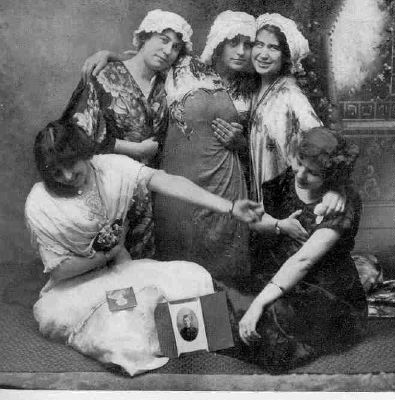
Female Hysteria In Victorian Times...


— Due to the nature of this subject, it may be inappropriate for children. 

Female hysteria was once a common medical diagnosis, made exclusively in women. The history of the notion of hysteria can be traced to ancient times. Galen, a prominent physician from the second century, wrote that hysteria was a disease caused by deprivation in particularly passionate women: hysteria was quite often in virgins, nuns, widows and, rarely, in married women.


Female Hysteria in Victorian era

Treatment for Female Hysteria

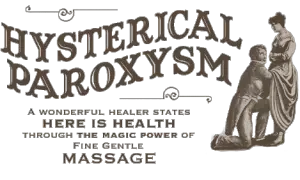
The prescription to this disease in was intercourse. As a last resort, in the case of virgins or nuns, women considered to be suffering from hysteria would sometimes undergo “pelvic massage” manual stimulation of the genitals by the doctor until the patient experienced “hysterical paroxysm“.


Hysterical Paroxysm
Hysterical Paroxysm

Hysteria is widely discussed in the medical literature of the Victorian era. In 1859, a physician claimed that a quarter of all women suffered from hysteria. He cataloged possible symptoms, which included faintness, nervousness, insomnia, fluid retention, heaviness in abdomen, muscle spasm, shortness of breath, irritability, loss of appetite for food or sex, and “a tendency to cause trouble.


Female hysteria symptoms

With so many possible symptoms, hysteria was always a natural diagnosis when the ailment could not be identified. For instance, before the introduction of Electroencephalography (EEG), epilepsy was frequently confused with hysteria.
Physicians thought that the stresses associated with modern life caused women to be more susceptible to nervous disorders and to develop faulty reproductive tracts. 
Posted by Suzanne La Force at 7:31 AM No comments:
Email ThisBlogThis!Share to XShare to FacebookShare to Pinterest

Wednesday, August 15, 2018

3D Stereoscopic Photographs of Cats in the Victorian Era...

Posted by Suzanne La Force at 9:11 AM No comments:
Email ThisBlogThis!Share to XShare to FacebookShare to Pinterest

Tuesday, August 14, 2018

The Gibson Girl, --- Documentary...

Posted by Suzanne La Force at 9:47 AM No comments:
Email ThisBlogThis!Share to XShare to FacebookShare to Pinterest

The French Writer Colette, --- Author Of The Famous Story "Gigi"...

Sidonie-Gabrielle Colette was born on January 28, 1873, to war hero and tax collector Jules-Joseph Colette and his wife Adèle Eugénie Sidonie ("Sido"), née Landoy, in the village of Saint-Sauveur-en-Puisaye in the département of Yonne, Burgundy. The family was initially well off, but by the time she was of school age poor financial management had substantially reduced her father's income and she attended a public school from the ages of 6 to 17 — this was, nevertheless, a fairly extensive education for a girl of the period.

Early years, 1893–1912

In 1893 she married Henry Gauthier-Villars (1859–1931) or "Willy", his nom-de-plume, a well-known author and publisher, and her first four novels — the four Claudine stories, Claudine à l'école (1900), Claudine à Paris (1901), Claudine en ménage (1902), and Claudine s'en va (1903) — appeared under his name. They chart the coming of age of their heroine, Claudine, from an unconventional fifteen-year-old in a Burgundian village to the literary salons of turn-of-the-century Paris. (The four are published in English as Claudine at School, Claudine in Paris, Claudine Married, and Claudine and Annie). The story they tell is semi-autobiographical, but not entirely — most strikingly, Claudine, unlike Colette, is motherless.
Willy, fourteen years older than his wife and one of the most notorious libertines in Paris, introduced Colette into avant-garde intellectual and artistic circles while engaging in sexual affairs and encouraging her own lesbianalliances. It was he who chose the titillating subject-matter of the Claudine novels, "the secondary myth of Sappho... the girls' school or convent ruled by a seductive female teacher" (Ladimer, p. 53). Colette later said that she would never have become a writer if it had not been for Willy. Nevertheless, when Colette wished to have her name associated with her work as it became widely known, Willy resisted and "locked her in her room until she produced enough pages to suit him."
Colette and Willy separated in 1906, although it was not until 1910 that the divorce became final. She had no access to the sizable earnings of the Claudine books — the copyright belonged to Willy — and until 1912 she followed a stage career in music halls across France, sometimes playing Claudine in sketches from her own novels, earning barely enough to survive and often hungry and unwell. This period of her life is recalled in La Vagabonde (1910), which deals with women's independence in a male society, a theme to which she would regularly return in future works. During these years she embarked on a series of relationships with other women, notably with Mathilde de Morny, Marquise de Belbeuf ("Missy"), with whom she sometimes shared the stage. On January 3, 1907, an onstage kiss between Missy and Colette in a pantomime entitled Rêve d'Égypte caused a near-riot, and as a result they were no longer able to live together openly, although their relationship continued for another five years.
In 1912 she married Henry de Jouvenel, the editor of Le Matin. A daughter, Colette de Jouvenel, nicknamed Bel-Gazou, was born in 1913. During the war she devoted herself to journalism, but marriage allowed her to devote her time to writing.

Writing career, 1920–1954


Colette, painted c. 1896 by Jacques Humbert
In 1920 Colette published Chéri, portraying love between an older woman and a much younger man. Chéri is the lover of Léa, a wealthy courtesan; Léa is devastated when Chéri marries a girl his own age, and delighted when he returns to her, but after one final night together she sends him away again.
The marriage to Jouvenel ended in divorce in 1924, partly due to Jouvenel's infidelities and partly to Colette's own affair with her sixteen-year-old stepson, Bertrand de Jouvenel. In 1925 she met Maurice Goudeket, who became her final husband (the couple stayed together until her death).
Already an established writer (The Vagabond had received three votes for the prestigious Prix Goncourt), the decades of the 1920s and 1930s were Colette's most productive and innovative period.[16] Set mostly in Burgundy or Paris during the Belle Époque, her work treated married life and sexuality. It was frequently quasi-autobiographical: Chéri (1920) and Le Blé en herbe (1923) both deal with love between an aging woman and a very young man, a situation reflecting her relationship with Bertrand de Jouvenel and even Goudeket, who was sixteen years her junior.[13][10] La Naissance du Jour (1928) is her explicit criticism of the conventional lives of women, expressed in a meditation on age and the renunciation of love through the character of her mother, Sido.
By this period Colette was frequently acclaimed as France's greatest woman writer. "It... has no plot, and yet tells of three lives all that should be known", wrote Janet Flanner of Sido. "Once again, and at greater length than usual, she has been hailed for her genius, humanities and perfect prose by those literary journals which years ago... lifted nothing at all in her direction except the finger of scorn."

Last years, 1940–1954

Colette was 67 years old at the fall of France, and remained in Paris, in her apartment in the Palais Royal. Her husband Maurice Goudeket, who was Jewish, was arrested by the Gestapo in December 1941, and although he was released after a few months through the intervention of the French wife of the German ambassador, Colette lived through the rest of the war years with the anxiety of a possible second arrest.[19][20] During the Occupation she produced two volumes of memoirs, Journal à rebours (1941) and De ma fenêtre (1942 — the two issued in English in 1975 as Looking Backwards).
In 1944 she published what became perhaps her most famous work, Gigi, telling the story of sixteen year old Gilberte ("Gigi") Alvar. Born into a family of demimondaines, Gigi is being trained as a courtesan to captivate a wealthy lover, but breaks with tradition by marrying him instead.[21] In 1949 it was made into a French film starring Danièle Delorme and Gaby Morlay, then in 1951 adapted for the stage with the then-unknown Audrey Hepburn in the title role, picked by Colette personally; the 1958 Hollywood musical, starring Leslie Caron and Louis Jourdan, with a screenplay by Alan Jay Lerner and a score by Lerner and Frederick Loewe, won the Academy Award for Best Picture.
In the postwar years, she became a famous public figure, crippled by arthritis and cared for by Goudeket, who supervised the preparation of her collected works, or Œuvres complètes (1948–1950). She continued to write during these years, bringing out L'Etoile vesper (1944) and Le Fanal bleu (1949), in which she reflected on the problems of a writer whose inspiration is primarily autobiographical. On her death on August 3, 1954, she was refused a religious funeral by the Catholic Church on account of her divorces, but was given a state funeral, the first French woman of letters to be granted this honour, and interred in Père-Lachaise cemetery.
Posted by Suzanne La Force at 8:11 AM No comments:
Email ThisBlogThis!Share to XShare to FacebookShare to Pinterest

Nikola Tesla: A Man Ahead of His Time...

Posted by Suzanne La Force at 6:26 AM No comments:
Email ThisBlogThis!Share to XShare to FacebookShare to Pinterest

Oscar Wilde Biography: His "Wild" Life...

Posted by Suzanne La Force at 6:25 AM No comments:
Email ThisBlogThis!Share to XShare to FacebookShare to Pinterest

What Was Life Like At A Victorian Reformatory School???...

Posted by Suzanne La Force at 6:20 AM No comments:
Email ThisBlogThis!Share to XShare to FacebookShare to Pinterest

Monday, August 13, 2018

So Dark, Quirky & Delightful!!!, --- Dracula's Ball, From "Van Helsing"...

Posted by Suzanne La Force at 5:28 AM No comments:
Email ThisBlogThis!Share to XShare to FacebookShare to Pinterest

"Annabel Lee," --- A Song, --- [Just hauntingly gorgeous, adds so much to this poem by Edgar Allen Poe!!!]...

Posted by Suzanne La Force at 5:17 AM No comments:
Email ThisBlogThis!Share to XShare to FacebookShare to Pinterest

40 Stunning Portraits Of Beautiful Women...

Posted by Suzanne La Force at 5:09 AM No comments:
Email ThisBlogThis!Share to XShare to FacebookShare to Pinterest

Vintage Photos Of Brides...

Posted by Suzanne La Force at 5:06 AM No comments:
Email ThisBlogThis!Share to XShare to FacebookShare to Pinterest

Saturday, August 11, 2018

"Annabel Lee," --- By Edgar Allan Poe...


Brilliantly read!!!
Posted by Suzanne La Force at 8:55 AM No comments:
Email ThisBlogThis!Share to XShare to FacebookShare to Pinterest

10 Things You Didn't Know About Romania...

...
Posted by Suzanne La Force at 5:56 AM No comments:
Email ThisBlogThis!Share to XShare to FacebookShare to Pinterest

10 Unsolved Mysteries Of Romania...

Posted by Suzanne La Force at 5:55 AM No comments:
Email ThisBlogThis!Share to XShare to FacebookShare to Pinterest

Visiting Dracula's Castle, --- Bran Castle In Transylvania, Romania...

Posted by Suzanne La Force at 5:52 AM No comments:
Email ThisBlogThis!Share to XShare to FacebookShare to Pinterest

"Dracula Untold," - Official Trailer...


I just loved this movie, --- so delightfully Goth and so beautifully done!!!...  Luke Evans was fabulous!!!
Posted by Suzanne La Force at 5:47 AM No comments:
Email ThisBlogThis!Share to XShare to FacebookShare to Pinterest
Newer Posts Older Posts Home
Subscribe to: Posts (Atom)

Translate

Search This Blog

Featured Post

The Bell Witch... :O

Popular Posts

  • "League of Extraordinary Gentlemen": Mina the Vampire......
  • The History Of Yardley's English Lavender...
    >>> The business was established by the Cleaver family in 1770, which is the official date displayed on its product labels. Accord...
  • The Beauty, Subtlety & Wisdom of Cats...
  • 10 Famous Laudanum Users, --- From "Strange Ago"...
    Laudanum was a medical concoction of ten percent opium and ninety percent alcohol. It was flavored with saffron, cinnamon, and cloves or oth...
  • The Victorian Toilet...
  • The Tell-tale Heart by Edgar Allen Poe...
  • Sinister & Deadly Victorian Women...
  • Sleepy Hollow: Lady Van Tassell
  • The Animated Biography of Edgar Allen Poe...
  • Hauntingly Beautiful Victorian Decor...


So, where can you read my stories???...

Yes, I am working on an anthology of my stories, which I call "Wild Flung Tales: Volume One," --- which will include the "Casebook of Lorraine Rokket" & the ending of "Marguerite and Company," (L'Enfant Terrible) and my vampire story "Blood Red Velvet," plus other cool and wicked tales... Hmmm... Well, what will the future bring for us??? I know I'm always going yo be working hard on my writing. And, ~ I do think of myself as lushly creating while wearing a long black velvet gown, sipping blackberry merlot, nibbling on shrimp cocktail and listening to thunder and train whistles at midnight. In reality, I'm probably wearing a shirt and sweatpants, drinking root beer, while munching on sandwiches with potato chips at six in the morning, my cat rascals Mi-Mi Midnighter and Fee-Fee Felicity tearing around my living room... ***BUT, I'll definitely let you know when and where you can read my stories. Yes, I know, I KNOW... You have to be patient while I do all that adding and editing!!!... Thanks. Hugs & love.


A very Victorian & co-oool bathtub!!!

'T is The House Of The Rising Sun: named for it's beautiful and mysterious owner, Madame Soliel Levant, the house could have been one of about five possible houses. Madame Rising Sun was rumored to have been killed with the help of her cousin.

Sooty London...

Sooty London...
And, you see the stilt walker, in the above image??? ^^^
So... the Cheshire Cat said: "We're all mad HERE. I'm mad. He's mad. She's mad. And, Alice said: "WHAT?! I don't want to be among mad people! And, I'm not mad!" The Cheshire Cat grinned his widest grin, washed his face and smoothed a paw over his ears. He then, preened his whiskers and replied: "But, --- but, you're HERE; aren't you?"

The Delight & Fantasy Of The Wicked World Of Storyville, New Orleans...

The Delight & Fantasy Of The Wicked World Of Storyville, New Orleans...
Where everything was for sale, ~ for a price.

... NOT for me, Pretty Babe...

... NOT for me, Pretty Babe...
Oh, yes, I would be far too alternative to be a traditional Victorian woman, of course...

Soooooooo...

REALLY, REALLY, DO scroll all the way down this page to the very end to avoid missing any of the unique content here. It's VERY worth doing! Don't skip the fascinating bios of Emily Dickinson and Edgar Allan Poe, two outstanding Victorian individuals that the world will never, ever, EVER forget!!!... ;)

OH, ~ those SO VERY-VERY wacky Victorians!!!... Bless their strange little hearts!!!...

Lily Dale, New York...

Lily Dale, New York...
The Victorian village of psychic mediums, you can apply to live and work there, but a board will scrutinize you to make sure that you are the real thing.


All that fragile tinted glass!!!...

All that fragile tinted glass!!!...
Isn't this SO LOVELY???

We must never stop believing..

We must never stop believing..
...that beautiful things can happen, even in times of chaos.

AH, ~ most excellent!!!... ;)

The Mad Hatter & The March Hare Try To Stuff The Dormouse In A Teapot...

The Mad Hatter & The March Hare Try To Stuff The Dormouse In A Teapot...
... from "Alice In Wonderland," by Lewis Carroll.

A very handsome, sexy vampire...

A very handsome, sexy vampire...
Yes, I have written a vampire short story, called "Blood Red Velvet".


I have always been different. As the image says:

I have always been different. As the image says:
This is partly why I'm a writer.

A lady would be wheeled out to water in one of these carriages so...

A lady would be wheeled out to water in one of these carriages so...
...she didn't have to be stared at as she walked into the ocean wearing her bathing costume.


"In Olden days a glimpse of stocking was looked on as something shocking..." --- Cole Porter.

"The Girl In The Red Velvet Swing,"...

"The Girl In The Red Velvet Swing,"...
...was a movie, starring Joan Collins, and based on the life of famous fashion and artist's model Evelyn Nesbit. Evelyn was involved in a scandal-murder trial said to be the "Trial Of The Century".

The incredibly lovely Evelyn Nesbit...

The incredibly lovely Evelyn Nesbit...
at the prime of her career. She was the model for the Victorian Coca~Cola girl.


What are these ladies doing posing in a field or a swamp?


See... Woman power has deep roots.

Trick photography became very popular in Victorian times.

Rachel, in the novel, "My Cousin Rachel," by Daphne du Maurier,...

Rachel, in the novel, "My Cousin Rachel," by Daphne du Maurier,...
Looked far too beautiful and mysterious in mourning.

Mmmm... Spicing up the pudding.

"You just gotta lace me tighter!!!"

Oh, --- a Victorian snow woman!!!

His Lordship Viscount Cattley declares...

His Lordship Viscount Cattley declares...


Ladies must always be...

Ladies must always be...
...properly armed.

Seances and extra-sensory happenings were popular.


Gotta love Coke!!!

During the years when Prince Albert was alive Queen Victoria was frequently pregnant.

During the years when Prince Albert was alive Queen Victoria was frequently pregnant.
She eventually had nine children.

Extremely pale women were seen as very beautiful...

Extremely pale women were seen as very beautiful...
and some went to great lengths to be ghostly white, even if that meant sacrificing their health.

In the early 1900s the civilized world was becoming industrialized.....

In the early 1900s the civilized world was becoming industrialized.....
There was great excitement about scientific inventions that could bring delight, ease, comfort and health. Thus, Steampunk is with us as cosplay, and entertainment.

Actress was a delightful, but still a slightly disreputable occupation.

This is Dorset Street, Whitechapel, at the East End of London,...

This is Dorset Street, Whitechapel, at the East End of London,...
...was where Jack The Ripper did his definite five murders.

Jane Avril, --- star of the Moulin Rouge.

Madame Hardy...

Madame Hardy...
Old World Rose.

Can you CAN-CAN?...

Can you CAN-CAN?...

WHO really WAS Jack The Ripper???...

WHO really WAS Jack The Ripper???...
He had Scotland Yard stumped. But, modern DNA testing has revealed who he likely was. Of course, he was never caught, and, one day, the murders just STOPPED. Did he die, or did he just get tired of it all???


Old London Bridge...

Old London Bridge...
Crumbled, caught on fire, was re-built in 1831, torn down and transported, --- all 10,000 tons of it to Arizona.


Do you think he's too stinky?... ?...

Do you think he's too stinky?...              ?...

Another movie inspired by Jack The Ripper's murders...

Another movie inspired by Jack The Ripper's murders...
Johnny Depp played Inspector Frederick Abberine in the movie, "From Hell," based on the award-winning graphic novel of the same name.

Ripperology continues in popularity, spawning hordes of theories and a sort of Ripper "culture".

Ripperology continues in popularity, spawning hordes of theories and a sort of Ripper "culture".
This "culture," which refuses to die, contains numerous movies & documentaries, even Ripper tours and museums.

Cor!!!... She could be Eliza Dolittle.

Cor!!!... She could be Eliza Dolittle.
"Wouldn't it be lover-ly?"

It almost looks like Cinderella's Ball carriage, but no...

It almost looks like Cinderella's Ball carriage, but no...
It's a fancy horse drawn hearse.

Laundress, push carter, shop girl, kitchen helper or maid in a noble's house, --- if she was lucky.

Laundress, push carter, shop girl, kitchen helper or maid in a noble's house, --- if she was lucky.
Life could be difficult for a young girl, unless she married well, sometimes to a rich man old enough to be her granfather. Of course, there was always prostitution, or mistress, or if she was beautiful and talented, --- a rare job, entertainer.

Beauty Tricks Of The Time...

Beauty Tricks Of The Time...
Swallowing arsenic wafers, plastering your face with white lead, using belladonna to enlarge your pupils so your eyes would look limpid, eating just enough to keep alive SO you could look fascinating, and ethereal.

Queen Victoria was a cat lover,...

Queen Victoria was a cat lover,...
And was largely responsible for the practice of keeping cats as pampered pets.

Yep...

Yep...

A Tiny Victorian Cottage...

A Tiny Victorian Cottage...
I'd LOVE to have it as a she-shack!!!

Mayfair Row Houses,...

Mayfair Row Houses,...

Like a dream...

Like a dream...

I LOVE Trains...

I LOVE Trains...
What a plush interior!!!

Oh, --- my!!!...

Oh, --- my!!!...
...A beautiful lion lamp!!!

A Civil War Mourning Hair Wreath...

A Civil War Mourning Hair Wreath...
made with human hair, --- such elaborate artistry was usually created by wig makers.

Victorians amused themselves posing for photographs,...

Victorians amused themselves posing for photographs,...
...which they called vignettes. Some of these were pretty weird.

Victorian women might be in mourning for two years, wearing deep black crepe and long veils...

Victorian women might be in mourning for two years, wearing deep black crepe and long veils...
Whereas, men might be in mourning only a few months, wearing a black arm band, or a swatch of black crepe around their hats.

Upper class women were educated, reading, writing, arithmetic,

Upper class women were educated, reading, writing, arithmetic,
... and perhaps, classical literature, history, music and dancing. Mostly, this was with a view to making a fine marriage. A woman's main function in life was to be a good wife and bear children.

From the 1971 Movie, "The Beguiled,"...

From the 1971 Movie, "The Beguiled,"...
a dark, erotic & twisted Civil War drama.

Mary Shelley published her novel, "Frankenstein," in 1818...

Mary Shelley published her novel, "Frankenstein," in 1818...
"Animals good. People, maybe good." --- Frankie.


A Victorian Christmas Card...

A Victorian Christmas Card...
Featuring the Krampus, the Christmas devil.

A Victorian Christmas Card...

A Victorian Christmas Card...
Yes, I love foxes!!!

The Walrus & The Carpenter, By Lewis Carroll...

The Walrus & The Carpenter, By Lewis Carroll...
Contemplating the unfortunate oysters.

Victorians Were Fascinated By The Idea Of Strange Prehistoric Creatures...

Victorians Were Fascinated By The Idea Of Strange Prehistoric Creatures...

Heh-heh-heh...

Heh-heh-heh...
As the cat shreds him...

A Victorian Kitchen...

A Victorian Kitchen...
With a wonderful old wood burning cooking stove.

Elizabeth Siddal Was A Famous Victorian Beauty And Artist's Model...

Elizabeth Siddal Was A Famous Victorian Beauty And Artist's Model...
Red hair was especially "in" in Victorian & Edwardian times.

Absinthe, --- "The Green Fairy"...

Absinthe, --- "The Green Fairy"...
It was rumored that overuse of Absinthe caused brain damage. The green drink, flavored with anise, was so strong that it would be consumed diluted with water poured through a sugar cube.

An Alligator Would Make A Mighty Interesting Pet...

An Alligator Would Make A Mighty Interesting Pet...

Zsa Zsa Gabor As Jane Avril...

Zsa Zsa Gabor As Jane Avril...
In the 1952 movie about the life of French artist Henri de Toulouse-Lautrec at the Parisian music hall The Moulin Rouge.

Dancers Of The Moulin Rouge...

Dancers Of The Moulin Rouge...
Poster by French artist Henri de Toulouse Lautrec.

This Could Be The Actual House Of The Rising Sun, In New Orleans...

This Could Be The Actual House Of The Rising Sun, In New Orleans...
About five other houses can claim that distinction too.

Bran Castle In Romania Has Some Association With Count Dracula...

Bran Castle In Romania Has Some Association With Count Dracula...
But, Bram Stoker was not known to have visited there.

Bat Man...

Bat Man...

Snail Lady's Sister, --- The Octopus Woman...

Snail Lady's Sister, --- The Octopus Woman...

Snail Lady Walking Along The Beach...

Snail Lady Walking Along The Beach...

What A Sensational Toilet!!! Of course, a Victorian home wouldn't have one so modern...

What A Sensational Toilet!!! Of course, a Victorian home wouldn't have one so modern...
But, with inventions springing up, flushing water closets were newly being installed in the most well-to-do households, --- a great hygenic luxury..

Mon Dieu, --- Victorian Paris,...

Mon Dieu, --- Victorian Paris,...
C'est magnifique!!!

Cage Crinoline...

Cage Crinoline...
That looks so incredibly uncomfortable!!! Can you imagine wearing that all day and then trying to sit down in it???

The Sexiest Dracula EVER, --- Incredibly Handsome Luke Evans In "Dracula Untold"...

The Sexiest Dracula EVER, --- Incredibly Handsome Luke Evans In "Dracula Untold"...
In May 1897 Bram Stoker published his novel "Dracula"...

Horrid Symptoms Of Arsenic Poisoning...

Horrid Symptoms Of Arsenic Poisoning...
Yes, in Victorian times arsenic was used to make a stunning green dye.

Cool!!!...

Cool!!!...
Cats & Bats!!!...

Ah, Black Roses!!!... I Just Love This Hat!!!...

Ah, Black Roses!!!...  I Just Love This Hat!!!...

Published in 1847, "Jane Eyre" Is One Of My Favorite Novels...

Published in 1847, "Jane Eyre" Is One Of My Favorite Novels...
Such chemistry!!!... (Ruth Wilson, as Jane) I adore independent, intelligent, "plain and little" Jane together with moody, passionate Edward Rochester!!!...

That Classy, Sexy Way With Their Stiff And Formal Wing Collars And Stocks!!!...

That Classy, Sexy Way With Their Stiff And Formal Wing Collars And Stocks!!!...
Yes!!!... (Toby Stevens, as Mr. Rochester) For over 150 years women have been falling in love with Mister Rochester, right along with Jane Eyre...

Thank you...

"Darkling, I listen..." --- John Keats.

Even among the sweetest souls a darkness of the mind can always creep in...

Even among the sweetest souls a darkness of the mind can always creep in...

Ahhhhhh!!!... Ohhhhhhh!!!...

"Decadent literature spread perfumes too dark and heady, it's exuberant blood-flowers breathe suffocating air." --- Frantisek Xaver Salda.

*************
As a writer. I love creating fiction set in Victorian and also Edwardian times and also reading it!!!... Oh, yes, it's so very entertaining to read a juicy novel!!!...


And, --- this blog is all about those very sexy and supposedly very repressed times, when "skirts" were put on those suggestive piano legs. (Did they REALLY???) And, people took their baths in their bedrooms behind screens and in tubs that were modestly draped in bed sheets and scrubbed themselves under nightgowns, --- plus it's about the depths of psychological darkness. So, --- you will find no porn posts or pornographic photos here... Naw, not a single one... [Below is a photo of a coy Victorian exotic dancer.]

Queen Victoria Of England reigned an astounding 63 years [1837 - 1901] and personified the Victorian Age...


[Above is a Victorian Christmas card featuring the Krampus, the Christmas devil, who came with birch switches to smack all the bad little boys and girls of Germanic countries... Oh, dear!!!]


Bicycles were a new stylish way to get around and people wore special cycling outfits. Laudanum, an opium concoction, could be bought over the counter at a pharmacy, as well as questionably effective potions and medicinal cure-alls, some downright dangerous, --- some containing mercury and even radium! And, Jack The Ripper slew prostitutes at will, terrorizing the East End of London, never being caught.\


And, death photography was popular, with people posing their deceased loved ones so that their images could be preserved artfully for posterity. [Ugh, --- really grotesque.]


I think of the Victorian age with elegant corseted women carrying parasols to protect their fair and delicate skin from the harshness of the sun, with upswept hairdos and gowned in silk and handmade lace, satin, velvet and ruffles. In the Edwardian age the most fashionable women wore enormous hats embellished with all sorts of elaborate decorations, --- ribbons, veils, laces, plumes, even whole stuffed birds.


Some Victorian women, upper class women, never cut their hair.


Women who were thought to be the most interesting were ghostly pale and slenderly curving with "wasp waists," and their "mounds" of bosoms, which was thought to be fascinating and even poetic. Yes, many extremely stylish women ate only enough to stay alive and consumption, or tuberculosis, was thought a fashionable thing to die of. [The horrific wasting disease killed the poet Keats, composer Fredric Chopin, who created the gorgeous piece for piano "Claire De Lune," and authors Emily and Charlotte Bronte, plus all the other Bronte siblings, --- Anne, Maria, Elizabeth and Branwell.] When upper class pregnant women began to lose their svelte shapes they went into "confinement," in the privacy of their huge homes, seldom being seen in public, --- not until they had their babies and got their glorious hourglass figures back.


[Isn't he handsome???, --- above!!!] I think of elegant Victorian gentlemen as typically with top and bowler hats, dressed in three piece suits draped with gold watches and chains and carrying walking sticks with crystal or brass knobs on the top of them, waving their fashionable calling cards. I think of tall white frame houses edged lavishly with what is called "gingerbread," houses decorated like elaborate wedding cakes.


In those houses were big families of sometimes seven to twelve children. [Many children didn't live to much more than their babyhood and methods of birth control were unreliable.] Of course, modern folks have purchased Victorian houses, painting them strange and stunning colors. Most upper class people rode around in horse drawn carriages. Bicycles, some with enormous wheels, were seen near the turn of the century and the motor car was becoming regular on streets in about 1910, which is into the Edwardian era. If you had any big money at all you could hire lots and lots of servants, because desperate, but honest people would work for very little wages. The very large houses of the wealthy had upstairs and downstairs maids, butlers, drivers for the carriages, a groom for the horses, a whole big staff to help the household to run smoothly. Women washed clothes with a laundry detergent made from flaked lye soap and washing soda. [And, that did a great job getting the clothes clean, was cheap too, not $10 to $13 a gallon, like detergent is today!!!]


Children were, of course, supposed to be seen not heard. Sadly, child labor was depressingly common among the poor of big cities.

But, once children of wealthy parents reached a certain age they often went off to boarding schools, especially if they were boys. Girls were expected to fill a modest and traditional role, - becoming excellent, efficient, dotting wives and loving mothers. [After 1823, a boy could marry as young as fourteen without his parent's consent, a girl as young as twelve, but most people married when they were in their twenties.] Some women became business owners, - few, or teachers and governesses, and were known as "bluestockings", and thought of as rather strange, too intelligent, spirited, too bold and too radical. [Ha-HA!!! I think I'd be one of those!!! My grandma, who was widowed when she was young and never married again, owned her own jewelry business.]


It was during this time that some wonderful literature was written: such great novels, --- "Jane Eyre", by Charlotte Bronte, and "Wuthering Heights", by Emily Bronte; Elizabeth Barrett Browning and William Butler Yeats wrote their poems; Lewis Carroll wrote "Alice's Adventures In Wonderland", and "Alice Through The Looking Glass". Sir Arthur Conan Doyle created the quirky detective genius Sherlock Holmes and his faithful sidekick Doctor Watson, whom some readers of the time were absolutely convinced was a real person. Bram Stoker created the wonderfully iconic horrific character Dracula. Charles Dickens and Edgar Allen Poe wrote their famous stories; Oscar Wilde wrote his only novel, "The Picture Of Dorian Gray" . Mark Twain wrote his wonderful book "Innocents Abroad" in 1869, which quickly became a best seller, then, "Tom Sawyer," and "Huckleberry Finn".


[Yes, he was a cat lover.]


The Civil War was going on in the United States. Starting in 1861, Southerners thought it might last only a few months and many young men of the aristocratic and rich plantation owners families were eager to get in on the action before it was over. That terrible war lasted years, and devastated the South, leaving many young widows to wear deep mourning clothes with black veils down to their knees. They were to be shrouded in black clothes for the rest of their lives, unless they married again, eventually, in propriety, according to the strict customs and morals of the time.


There were astounding discoveries in the Victorian and Edwardian eras, with the beginnings of industrialization... Nicola Tesla, scientific genius, was born in Serbia in 1856; we have alternating electrical current because of him. John Snow made a major breakthrough with in the treatment of dreaded cholera with the universal germ theory of disease. Louis Pasteur added to that, creating a safe way to decontaminate milk and stabilize it so it wouldn't spoil as fast by heating the liquid to 160F. Smallpox vaccinations were first given, causing the infamous deadly and disfiguring scourge to eventually be practically exterminated in our modern world. The far distant planet Neptune was discovered. Richard Owen created the term "Dinosaur," --- which stood for "The Terrible Lizard".


Even the recipe for the delicious and very popular soft drink Coca Cola was invented; it became known as the helper of listless women because it made from the coca leaf and originally contained traces of the stimulant cocaine, which was legal in Victorian times.


M'lls. Morlacci and Baretta dancing the Can Can Dance


Music halls where saucy and even scandalous acts could be seen were becoming all the rage, such as the Moulin Rouge in Paris where artist Henri de Toulouse-Lautrec, who was only four feet six inches tall and who's shortness was the results of his broken legs never healing properly, drew and painted beautiful dancers who often threw their ruffled petticoats over their heads during their routines. [In it's early days, the vigorous Can Can dance with it's cartwheels, jumping splits, high kicks and rapid turns was sometimes performed by men too.]


[Victorians seemed to like peculiar photos.]


Alright, - then... Jolly good, --- oh, jolly good, sweetlings!!!,,, Crack on!!!... ;D


Movies And T.V. Shows Set In Victorian Times & A Little Beyond That, In Edwardian Times - ;)...

  • War Flowers [A Civil War Drama], with Christina Ricci
  • The Beguiled, 2017, with Nicole Kidman and Colin Farrell
  • The Beguiled, 1971, with Geraldine Page and Clint Eastwood
  • Those Magnificent Men In Their Flying Machines, with Stuart Whitman, Sara Miles, Terry-Thomas & Robert Morley
  • Moulin Rouge, 1952, with Jose Ferrer & Zsa Zsa Gabor
  • Dr. Quinn: Medicine Woman, 6 seasons, with Jane Seymour, Joe Lando, William Shockley, Barbara Babcock & Orson Bean
  • Wild, Wild West, with Will Smith, Salma Haylek & Kevin Kline
  • Titanic, with Leonardo Di Caprio, Kate Winset and Billy Zane
  • The Seven Faces Of Doctor Lao, with Tony Randall
  • Butch Cassidy And The Sundance Kid, with Paul Newman, Robert Redford & Katherine Ross
  • Oliver, the musical
  • Gigi, with Leslie Caron, Maurice Chevalier & Louis Jourdan
  • The Greatest Showman, with Hugh Jackman
  • Elvira Madiagan
  • Jack The Ripper, 1988, with Michael Caine
  • From Hell, with Johnny Depp
  • Like Water For Chocolate, [Spanish]
  • Around The World In 80 Days, with David Niven & Shirley Mac Laine
  • Far From The Madding Crowd, 1998
  • 20,000 Leagues Under The Sea, with Kirk Douglas & James Mason
  • League Of Extraordinary Gentlemen, with Sean Connery, Richard Roxburgh, & Peta Wilson & Stuart Townsend
  • Ruby In The Smoke, Masterpiece Theater, with Billie Piper
  • A Christmas Carol, 1984
  • The Glass Virgin, based on the novel by Catherine cookson
  • The Rag Nymph, based on the novel by Catherine Cookson
  • War Of The Worlds, 1953
  • The Time Machine, with Rod Taylor & Yvette Mimieau
  • Penny Dreadful, T.V. series, with Eva Green, Josh Hartnett & Timothy Dalton
  • The Great Race
  • My Fair Lady
  • The Girl In The Red Velvet Swing, with Joan Collins
  • Mary Poppins, with Julie Andrews & Dick Van Dyke
  • Far And Away, with Nicole Kidman & Tom Cruise
  • The Corpse Bride, a Tim Burton animated film
  • Sleepy Hollow, with Johnny Depp & Christina Ricci
  • Mack The Knife, musical, with Raul Julia
  • Journey To The Center Of The Earth, with James Mason & Arlene Dahl
  • Around The World In 80 Days, with Pierce Brosnan
  • The Governess, with Minnie Driver, excellent sensual tale
  • Jane Eyre, with Toby Stevens, the best version ever!
  • Mansfield Park
  • The French Lieutenant's Woman, with Merle Streep
  • Swept From The Sea, with Vincent Perez & Rachel Weisz
  • Oliver Twist, musical
  • Peter Pan, Disney, animated
  • Neverland, T.V. series, with Rhys Ifans
  • Hook, with Dustin Hoffman
  • Van Helsing, The London Assignment, animated, with the voice of Hugh Jackman and others of the original Van Helsing
  • Doctor Zhivago, with Omar Shariff & Julie Christie
  • Alice Through The Looking Glass, with Johnny Depp
  • Alice In Wonderland, with Johnny Depp
  • Alice In Wonderland, Disney, animated version
  • The Moulin Rouge, old version, with Jose Ferrer & Zsa Zas Gabor
  • The Moulin Rouge, musical with Nicole Kidman & Ewan Mc Gregor
  • Young Victoria
  • Dracula: The Untold Story, with Luke Evans
  • The Piano, with Holly Hunter & Sam Neil
  • Van Helsing, with Hugh Jackman
  • Sherlock Holmes: A Game Of Shadows, with Robert Downey Jr., Jude Law & Stephen Fry
  • Sherlock Holmes, with Robert Downey Jr., Rachel Mc Adams & Jude Law
  • Legends Of The Fall, with Brad Pitt, Adian Quinn, Anthony Hopkins, Henry Thomas and Julia Ormand
  • Tombstone, with Kurt Russell, Bill Paxton and Sam Elliott
  • Samurai Champloo, anime series set in the late Edo Period of Japan, which was in the Victorian Era
  • Victoria, T.V. series, with Jenna Coleman & Tom Hughes
  • The Duchess Of Duke Street, BBC T.V. series, 1976-1977 with Gemma Jones & Christopher Caszenove
  • Dickensian, BBC T.V. series, a prequel to many of Dickens' stories, with Stephen Rea
  • Gangs Of New York, with Leonardo Di Caprio, Claire Danes & Daniel Day Lewis

Non-fiction, Novels, Stories & Plays Set In Victorian Times And A Little Beyond That, ;)...

  • The Widow Of The South, by Robert Hicks
  • Gone With The Wind, by Margaret Mitchell
  • The Goblin Market, by Christina Rosetti
  • The novels & stories of Charles Dickens
  • The Harlot's House, by Oscar Wilde
  • Beautiful Joe, by Margaret Marshall Saunders
  • The Piano, [novel based on the movie], by Jane Campion
  • The Four Winds Of Heaven, by Monique Raphel High
  • Little Women, by Louisa May Alcott
  • The Adventures Of Tom Sawyer, and Huckleberry Finn, by Mark Twain
  • The Time Machine, by H. G. Wells
  • War Of The Worlds, by H. G. Wells
  • American Eve: Evelyn Nesbit, Stanford White, The Birth Of The "It" Girl And The Crime Of The Century, by Paula Uruburu
  • The Picture Of Dorian Gray, by Oscar Wilde
  • The Crimson Petal And The White, by Michel Faber
  • Nicholas & Alexandra, by Robert K. Massie
  • Les Miserables, by Victor Hugo
  • The works of Edgar Allen Poe
  • The Three Penny Opera, play by Bertolt Brecht & Kurt Weill
  • From Hell, graphic novel, by Alan Moore & Eddie Campbell
  • The Strange Case Of Doctor Jekyll And Mister Hyde, by Robert Louis Stevenson
  • The House Of Dark Desires & other stories, by Louisa Burton
  • Madame Bovary, by Gustave Flaubert
  • Far From The Madding Crowd, by Thomas Hardy
  • Tess Of D'Ubervilles, by Thomas Hardy
  • Peter Pan, by J.M. Barrie
  • Anna Karenina, by Leo Tolstoy
  • Doctor Zhivago, by Boris Pasternak
  • Alice Through The Looking Glass, by Lewis Carroll
  • Alice In Wonderland, by Lewis Carroll
  • Frankenstein, by Mary Shelly
  • Dracula, by Bram Stoker
  • The Plays Of Oscar Wilde
  • Daughter Of Fortune, by Isabel Allende
  • The Irene Adler novels, by Carole Nelson Douglas
  • The Sherlock Holmes novels, by Arthur Conan Doyle
  • Of course!... Wuthering Heights, by Emily Bronte & Jane Eyre, by Charlotte Bronte
  • Unmentionable, by Therese Oneill

Blog Archive

  • ▼  2026 (117)
    • ▼  September (16)
      • When You're Evil, --- Voltaire...
      • The Addams Family Cartoons...
      • I Love My Cat... ;)
      • Weird Victorian Medicines....
      • Victorian Teddy Bears & Scary Teddy Bear's Picnic...
      • The Animated Biography of Edgar Allen Poe...
      • The Mask of the Red Death...
      • Sleppy Hollow: The Witch's Lair...
      • Life of a Chimney Sweep...
      • They were at the peak of their beauty: Johnny Depp...
      • The Tell-tale Heart by Edgar Allen Poe...
      • The Legend Of Sleepy Hol.low: Spooky Story...
      • Van Helsing: The London Assignment...
      • The Visionary World of Emily Dickinson...
      • Hauntingly Beautiful Victorian Decor...
      • Sleepy Hollow: Lady Van Tassell
    • ►  August (15)
    • ►  July (1)
    • ►  June (7)
    • ►  May (28)
    • ►  February (7)
    • ►  January (43)
  • ►  2025 (98)
    • ►  December (48)
    • ►  November (1)
    • ►  September (17)
    • ►  August (32)
  • ►  2024 (117)
    • ►  December (12)
    • ►  October (1)
    • ►  September (16)
    • ►  August (43)
    • ►  July (9)
    • ►  June (36)
  • ►  2023 (105)
    • ►  August (1)
    • ►  July (22)
    • ►  May (1)
    • ►  April (11)
    • ►  March (9)
    • ►  February (26)
    • ►  January (35)
  • ►  2022 (159)
    • ►  December (72)
    • ►  November (70)
    • ►  October (10)
    • ►  June (7)
  • ►  2021 (12)
    • ►  October (9)
    • ►  January (3)
  • ►  2020 (4)
    • ►  August (1)
    • ►  June (2)
    • ►  May (1)
  • ►  2019 (54)
    • ►  December (1)
    • ►  November (2)
    • ►  September (9)
    • ►  August (3)
    • ►  July (10)
    • ►  June (3)
    • ►  May (6)
    • ►  April (2)
    • ►  February (3)
    • ►  January (15)
  • ►  2018 (159)
    • ►  December (10)
    • ►  October (8)
    • ►  September (22)
    • ►  August (66)
    • ►  July (9)
    • ►  June (2)
    • ►  April (2)
    • ►  March (5)
    • ►  February (7)
    • ►  January (28)
  • ►  2017 (186)
    • ►  December (33)
    • ►  November (2)
    • ►  October (21)
    • ►  September (2)
    • ►  August (8)
    • ►  July (16)
    • ►  June (17)
    • ►  May (16)
    • ►  April (23)
    • ►  March (40)
    • ►  February (5)
    • ►  January (3)
  • ►  2016 (220)
    • ►  December (38)
    • ►  November (71)
    • ►  October (9)
    • ►  September (14)
    • ►  August (8)
    • ►  July (80)

"Nobody," By Emily Dickson...

I'm Nobody! Who are you? Are you - Nobody - too? Then, there's a pair of us! Don't tell! they'd banish us, - you know! How dreary - to be - Somebody! How public - like a Frog - To tell one's name - the livelong June - To an admiring Bog!

THE LIFE OF EMILY DICKINSON...

Emily Dickinson Born December 10, 1830 Amherst, Massachusetts, U.S. Died May 15, 1886 (aged 55) Amherst, Massachusetts, U.S. Resting place Amherst West Cemetery Occupation Poet Alma mater Mount Holyoke Female Seminary Parents Edward Dickinson Emily Norcross Dickinson Relatives William Austin Dickinson (brother) Lavinia Norcross Dickinson (sister) >>> Emily Elizabeth Dickinson was an American poet. Little-known during her life, she has since been regarded as one of the most important figures in American poetry. Dickinson was born into a prominent family with strong ties to its community. After studying at the Amherst Academy for seven years in her youth, she briefly attended the Mount Holyoke Female Seminary before returning to her family's home in Amherst. Evidence suggests that Dickinson lived much of her life in isolation. Considered an eccentric by locals, she developed a penchant for white clothing and was known for her reluctance to greet guests or, later in life, even to leave her bedroom. Dickinson never married, and most of her friendships were based entirely upon correspondence. Although Dickinson was a prolific writer, her only publications during her lifetime were 10 of her nearly 1,800 poems and one letter. The poems published then were usually edited significantly to fit conventional poetic rules. Her poems were unique for her era; they contain short lines, typically lack titles, and often use slant rhyme as well as unconventional capitalization and punctuation. Many of her poems deal with themes of death and immortality (two recurring topics in letters to her friends), aesthetics, society, nature, and spirituality. Although Dickinson's acquaintances were most likely aware of her writing, it was not until after she died in 1886—when Lavinia, Dickinson's younger sister, discovered her cache of poems—that her work became public. Her first published collection of poetry was made in 1890 by her personal acquaintances Thom as Wentworth Higginson and Mabel Loomis Todd, though they heavily edited the content. A complete collection of her poetry first became available in 1955 when scholar Thomas H. Johnson published The Poems of Emily Dickinson. In 1998, The New York Times reported on a study in which infrared technology revealed that certain poems of Dickinson's had been deliberately censored to exclude the name "Susan". At least eleven of Dickinson's poems were dedicated to her sister-in-law Susan Huntington Gilbert Dickinson, and all the dedications were later obliterated, presumably by Todd. This censorship serves to obscure the nature of Emily and Susan's relationship, which many scholars have interpreted as romantic. ~ From "Wikpedia'.

The Elegant And Fierce Emily Dickinson...

The Elegant And Fierce Emily Dickinson...

"Annabel Lee," By Edgar Allan Poe...

It was many and many a year ago, In a kingdom by the sea, That a maiden there lived whom you may know By the name of Annabel Lee; And this maiden she lived with no other thought Than to love and be loved by me. I was a child and she was a child, In this kingdom by the sea, But we loved with a love that was more than love— I and my Annabel Lee— With a love that the wingèd seraphs of Heaven Coveted her and me. And this was the reason that, long ago, In this kingdom by the sea, A wind blew out of a cloud, chilling My beautiful Annabel Lee; So that her highborn kinsmen came And bore her away from me, To shut her up in a sepulchre In this kingdom by the sea. The angels, not half so happy in Heaven, Went envying her and me— Yes!—that was the reason (as all men know, In this kingdom by the sea) That the wind came out of the cloud by night, Chilling and killing my Annabel Lee. But our love it was stronger by far than the love Of those who were older than we— Of many far wiser than we— And neither the angels in Heaven above Nor the demons down under the sea Can ever dissever my soul from the soul Of the beautiful Annabel Lee; For the moon never beams, without bringing me dreams Of the beautiful Annabel Lee; And the stars never rise, but I feel the bright eyes Of the beautiful Annabel Lee; And so, all the night-tide, I lie down by the side Of my darling—my darling—my life and my bride, In her sepulchre there by the sea— In her tomb by the sounding sea.

THE LIFE OF EDGAR ALLAN POE...

Edgar Allan Poe (January 19, 1809 – October 7, 1849) was an American writer, poet, author, editor, and literary critic who is best known for his poetry and short stories, particularly his tales of mystery and the macabre. He is widely regarded as a central figure of Romanticism and Gothic fiction in the United States, and of American literature. Poe was one of the country's earliest practitioners of the short story, and is considered the inventor of the detective fiction genre, as well as a significant contributor to the emerging genre of science fiction. He is the first well-known American writer to earn a living through writing alone, resulting in a financially difficult life and career Poe was born in Boston, the second child of actors David and Elizabeth "Eliza" Poe. His father abandoned the family in 1810, and when his mother died the following year, Poe was taken in by John and Frances Allan of Richmond, Virginia. They never formally adopted him, but he was with them well into young adulthood. He attended the University of Virginia but left after a year due to lack of money. He quarreled with John Allan over the funds for his education, and his gambling debts. In 1827, having enlisted in the United States Army under an assumed name, he published his first collection, Tamerlane and Other Poems, credited only to "a Bostonian". Poe and Allan reached a temporary rapprochement after the death of Allan's wife in 1829. Poe later failed as an officer cadet at West Point, declared a firm wish to be a poet and writer, and parted ways with Allan. Poe switched his focus to prose, and spent the next several years working for literary journals and periodicals, becoming known for his own style of literary criticism. His work forced him to move between several cities, including Baltimore, Philadelphia, and New York City. In 1836, when he was 27, he married his 13-year-old cousin, Virginia Clemm. She died of tuberculosis in 1847. In January 1845, he published his poem "The Raven" to instant success. He planned for years to produce his own journal The Penn, later renamed The Stylus. But before it began publishing, Poe died in Baltimore in 1849, aged 40, under mysterious circumstances. The cause of his death remains unknown, and has been variously attributed to many causes including disease, alcoholism, substance abuse, and suicide. He was found dead on the street. ~ From "Wikpedia".

Edgar, The Strange...

Edgar, The Strange...
The Quirky Genius Of Horror
Simple theme. Powered by Blogger.