Monday, March 20, 2017

Crinolines, - From "The History Of Hooped Petticoats"...

Image result for images of victorian darkness

In the early 1850s, women began to wear a cage crinoline or hooped petticoat to expand their skirts. Several modifications were made to the design of the crinoline before they began to fall out of fashion in the 1870s, although the crinoline did make a brief comeback between 1957 and 1960.

A crinoline required enormous quantities of material. A proper hoop consisted of “four narrow steels each covered with tape and run into the muslin or calico petticoat. The one nearest the waist usually measured one and three-quarter yards in length, while that at the lower edge of the skirt was two and one-half yards in length”. The hoops were held together by strings of broad tape reaching from the lower edge of the skirt to the belt.  The bottom hoop of even the largest crinoline was not more than 5 ½ to 6 yards in circumference.” She then explains that the full skirt falling in loose folds over it would likely have a larger circumference. She also gives the example of an evening dress of 1859 made up of with four skirts, each trimmed with ruches, that required 1,100 yards of tulle. Imagine carrying such on load on one’s back, so to speak.
In the 1860s, the steel hoops were slightly flattened in front and the fullness of the skirt began to shift to the back. By 1868 the crinoline became more of a half crinoline as the reinforcement of the skirt slid entirely to the back where a mass of material was gathered and looped into a kind of bustle which ended in a train.
Ridiculing Crinolines. Women had such a love for their crinolines that they appear to have been willing to accept men’s ridicule and to withstanding the perils encountered when wearing them.
Men complained that women encased in their huge contraptions were unapproachable; therefore they could not escort them or offer them their arm, their crinolines as being like a majestic ship, sailing proudly ahead, while her male escort sailed along behind. From the point of view of men, crinolines distorted the feminine shape. In Germany, many males swore that they would not marry a girl who wore such an apparatus. Some men went as far as comparing women’s iron hoops to weapons of armory.
When women wore their crinolines they encountered problems such as walking through doors with someone else or sitting on a sofa with another woman. When sitting down their crinolines would be tilted up in the air, revealing too much. When walking around a room accidents could happen to the ladies such as knocking over an occasional table laden with bric-a-brac, or they could inadvertently become combustible if they came too close to a fire. Due to the enormous size of their skirts fire victims could not be saved by rolling them a rug. Getting into a carriage was almost impossible and women also had to be careful when approaching a carriage otherwise they could get their hoops entangled in the wheels.
Wearing a crinoline on a windy day was quite a feat. To begin with there was the embarrassment of skirts lifting up high in the air exposing more than what was considered proper for a lady. Fortunately for milady (or unfortunately for certain species) lacy pantaloons were now in vogue. In windy weather the gals that were light as a feather risked being blown off their feet, or even over a cliff. With luck, maybe their crinoline might have acted as a parachute. By the 1870s, the exaggerated skirts lost their appeal and women began to wear closely fitted garments, doing away with the crinoline. Although between 1957 and 1960 the crinoline resurfaced, but it was more of a stiffened or starched petticoat.

The demand for stiffening materials for hooped undergarments led to the expansion of the whaling and steel industries, and new factories were established to manufacture steel hoops, crinolines and bustles. In 1722, for example, the Dutch States General was formed in Holland. This company employed a vast army of whale hunters who raised the need for the building of more fishing boats. With the invention of the steel hoops in the fabrication of crinolines, there was a boom in the steel industry and steel-hoop manufacturers became rich men. Between 1854 and 1866, the largest factory in Saxony delivered altogether 9,597,600 crinolines. Each crinoline required on average about 90 ells (60 yards) of wire. By 1877, one of the largest crinoline and bustle manufacturing firms in England, W.S. and E.H. Thomson, had established factories in France, Germany and the United States. The London factory employed over a thousand women and produced 4000 crinolines daily. The Saxony factory produced over 9 ½ million crinolines in the course of a dozen years.


--- By Yvette Mahe.

10 Things You Should Know About Voltaire...


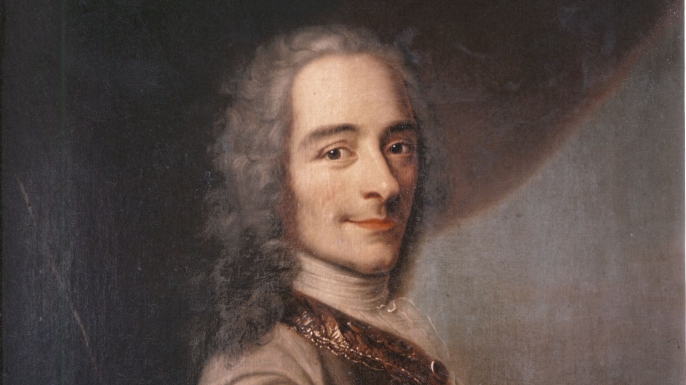
François-Marie Arouet, better known by his immortal pen name, Voltaire, was born on November 21, 1694, in Paris. In a literary career that stretched over 60 years, he wrote many influential poems, essays and books including “Candide” and “Letters Concerning the English Nation.” His surgical wit and provocative ideas on religion, liberty and ethics saw him both celebrated and scorned in the courts of Europe, and later helped cement his reputation as one of the foundational figures of the Enlightenment. On the anniversary of Voltaire’s birth, learn 10 things you may not know about one of the 18th century’s most quotable and controversial thinkers.
1. The origins of his famous pen name are unclear.
Voltaire had a strained relationship with his father, who discouraged his literary aspirations and tried to force him into a legal career. Possibly to show his rejection of his father’s values, he dropped his family name and adopted the nom de plume “Voltaire” upon completing his first play in 1718. Voltaire never explained the meaning of his pen name, so scholars can only speculate on its origins. The most popular theory maintains the name is an anagram of a certain Latinized spelling of “Arouet,” but others have claimed it was a reference to the name of a family chateau or a nod to the nickname “voluntaire” (volunteer), which Voltaire may have been given as a sarcastic reference to his stubbornness.
2. He was imprisoned in the Bastille for nearly a year. 
Voltaire’s caustic wit first got him into trouble with the authorities in May 1716, when he was briefly exiled from Paris for composing poems mocking the French regent’s family. The young writer was unable to bite his tongue, however, and only a year later he was arrested and confined to the Bastille for writing scandalous verse implying the regent had an incestuous relationship with his daughter. Voltaire boasted that his cell gave him some quiet time to think, and he eventually did 11 months behind bars before winning a release. He later endured another short stint in the Bastille in April 1726, when he was arrested for planning to duel an aristocrat that had insulted and beaten him. To escape further jail time, he voluntarily exiled himself to England, where he remained for nearly three years.
3. He became hugely wealthy by exploiting a flaw in the French lottery. 
In 1729, Voltaire teamed with mathematician Charles Marie de La Condamine and others to exploit a lucrative loophole in the French national lottery. The government shelled out massive prizes for the contest each month, but an error in calculation meant that the payouts were larger than the value of all the tickets in circulation. With this in mind, Voltaire, La Condamine and a syndicate of other gamblers were able to repeatedly corner the market and rake in massive winnings. The scheme left Voltaire with a windfall of nearly half a million francs, setting him up for life and allowing him to devote himself solely to his literary career.
voltaire 2
4. He was an extraordinary prolific writer.
Voltaire wrote more than 50 plays, dozens of treatises on science, politics and philosophy, and several books of history on everything from the Russian Empire to the French Parliament. Along the way, he also managed to squeeze in heaps of verse and a voluminous correspondence amounting to some 20,000 letters to friends and contemporaries. Voltaire supposedly kept up his prodigious output by spending up to 18 hours a day writing or dictating to secretaries, often while still in bed. He may have also been fueled by heroic amounts of caffeine—according to some sources, he drank as many as 40 cups a day.
5. Many of his most famous works were banned.
Since his writing denigrated everything from organized religion to the justice system, Voltaire ran up against frequent censorship from the French government. A good portion of his work was suppressed, and the authorities even ordered certain books to be burned by the state executioner. To combat the censors, Voltaire had much of his output printed abroad, and he published under a veil of assumed names and pseudonyms. His famous novella “Candide” was originally attributed to a “Dr. Ralph,” and he actively tried to distance himself from it for several years after both the government and the church condemned it. Despite his best attempts to remain anonymous, Voltaire lived in almost constant fear of arrest. He was forced to flee to the French countryside after his “Letters Concerning the English Nation” was released in 1734, and he went on to spend the majority of his later life in unofficial exile in Switzerland.
6. He helped popularize the famous tale about Sir Isaac Newton and the apple.
Though the two never met in person, Voltaire was an enthusiastic acolyte of the English physicist and mathematician Sir Isaac Newton. Upon receiving a copy of Newton’s “Principia Mathematica,” he claimed he knelt down before it in reverence, “as was only right.” Voltaire played a key role in popularizing Newton’s ideas, and he offered one of the first accounts of how the famed scientist developed his theories on gravity. In his 1727 “Essay on Epic Poetry,” Voltaire wrote that Newton “had the first thought of his System of Gravitation, upon seeing an apple falling from a tree.” Voltaire wasn’t the original source for the story of the “Eureka!” moment, as has often been claimed, but his account was instrumental in making it a fabled part of Newton’s biography.
7. He had a brief career as a spy for the French government. 
Voltaire struck up a lively correspondence with Frederick the Great in the late 1730s, and he later made several journeys to meet the Prussian monarch in person. Before one of these visits in 1743, Voltaire concocted an ill-advised scheme to use his new position to repair his reputation with the French court. After hatching a deal to serve as a government informant, he wrote several letters to the French giving inside dope on Frederick’s foreign policy and finances. Voltaire proved a lousy spy, however, and his plan quickly fell apart after Frederick grew suspicious of his motives. The two nevertheless remained close friends—some have even claimed they were lovers—and Voltaire later moved to Prussia in 1750 to take a permanent position in the Frederick’s court. Their relationship finally soured in 1752, after Voltaire made a series of scathing attacks on the head of the Prussian Academy of Sciences. Frederick responded by lambasting Voltaire, and ordered that a satirical pamphlet he had written be publically burned. Voltaire left the court for good in 1753, supposedly telling a friend, “I was enthusiastic about [Frederick] for 16 years, but he has cured me of this long illness.”

Illustration of Voltaire translating the work of Isaac Newton

8. He never married or fathered children.
While Voltaire technically died a bachelor, his personal life was a revolving door of mistresses, paramours and long-term lovers. He carried out a famous 16-year affair with the brilliant—and very married—author and scientist Émilie du Châtelet, and later had a committed, though secretive, partnership with his own niece, Marie-Louise Mignot. The two lived as a married couple from the early 1750s until his death, and they even adopted a child in 1760, when they took in a destitute young woman named Marie- Françoise Corneille. Voltaire later paid the dowry for Corneille’s marriage, and often referred to Mignot and himself as her “parents.”
9. He set up a successful watchmaking business in his old age. 
While living in Ferney, Switzerland, in the 1770s, Voltaire joined with a group of Swiss horologists in starting a watchmaking business at his estate. With the septuagenarian Voltaire acting as manager and financier, the endeavor soon grew into a village-wide industry, and Ferney watches came to rival some of the best in Europe. “Our watches are very well made,” he once wrote to the French ambassador to the Vatican, “very handsome, very good and cheap.” Voltaire saw the enterprise as a way to prop up the Ferney economy, and he used his vast network of upper class contacts to find prospective buyers. Among others, he eventually succeeded in peddling his wares to the likes of Catherine the Great of Russia and King Louis XV of France.
10. He continued causing controversy even in death.
Voltaire died in Paris in 1778, just a few months after returning to the city for the first time in 28 years to oversee the production of one of his plays. Over the last few days of his life, Catholic Church officials repeatedly visited Voltaire—a lifelong deist who was often critical of organized religion—in the hope of persuading him to retract his opinions and make a deathbed confession. The great writer was unmoved, and supposedly brushed off the priests by saying, “let me die in peace.” His refusal meant that he was officially denied a Christian burial, but his friends and family managed to arrange a secret internment in the Champagne region of France before the order became official.
--- By Evan Andrews.

From RWA: Laudanum Use In The 19th Century...


Regular laudanum users were Lord Byron, Percy Bysshe Shelley, John Keats, Charles Dickens, Edgar Allen Poe, William Taylor Coleridge, and Sir Arthur Conan Doyle (as well as his character Sherlock Holmes) and they were only a few. I confess I’m more than a little surprised that Charles Dickens appears on the list. Before we judge, however, we have to understand the times. 

Look in your medicine cabinet. If yours is like mine, you stock pain relievers for headaches and arthritis, coughs, Immodium, allergies, and gas relief. In the 1800’s, mortality from cholera, malaria, and dysentery was very high. Now we only have to take an Immodium tablet or something similar, but diarrhea actually killed huge numbers of people while they suffered terrible cramping. Even if laudanum couldn’t cure them, it eased their pain. 

New Rx's 
decrease death 
rates
Tuberculosis was a problem, made worse by living conditions and hard work necessary for life in those times. Think of the furor when there’s an outbreak of e-coli, but that must have been commonplace in Victorian times and hardly newsworthy. 

It’s hard to realize just how deadly these diseases were because we have sanitation that has diminished cholera and dysentery. The drainage of swamp lands decreased malaria, a disease one of my ancestors contracted from living in the Brazos River Valley near Waco, Texas in the 1880’s. Introduction of aspirin in 1899 provided an alternative medication for pain relief. Along with antibiotics, modern pharmaceuticals have diminished the severity of all those diseases. 

A century ago, a
sick woman would
have taken 
laudanum
I wouldn’t feel comfortable providing the recipe I discovered for making laudanum, but it was 10% opium and 90% alcohol and usually flavored with cinnamon and sometimes also saffran. Not only was it available over the counter, it was recommended by doctors for everything from menstrual cramps to tuberculosis. It was much cheaper than any other form of pain killer, and that made it attractive to those in the lower economic classes. By no means was laudanum used only by the poor. Wealthy women even used it to achieve a coveted pallid complexion, and even infants were spoon fed laudanum. Only later did people realize that laudanum use was habit forming and demanded greater and greater doses to provide relief. 


Modern 
vaccinations
eliminate formerly
fatal diseases
In 1906, the Pure Food and Drug Act required that certain specified drugs--alcohol, cocaine, heroin, morphine, and cannabis--be accurately labeled with contents and dosage. Previously, many drugs had been sold as patent medicines with secret ingredients or misleading labels. Authorities estimate that sales decreased by one third after labeling was required. The Harrison Narcotics Tax Act of 1914 restricted the manufacture and distribution of opiates, including laudanum, and coca derivatives in the United States. Not until the middle of the 20th century did the U.S. government limit the use of opiates. In 1970, the U.S. adopted the Uniform Controlled Substances Act, which regulated opium tincture (laudanum) as a Schedule II substance and placed tighter controls on the drug.

Sunday, March 19, 2017

Old Nichol Street, - The Worst Part Of The East End Of Victorian London...

Image result for images of victorian darkness


Part of Charles Booth's poverty map showing the Old Nichol in the East End of London. Published 1889 in Life and Labour of the People in London. The red areas are "middle class, well-to-do", light blue areas are “poor, 18s to 21s a week for a moderate family”, dark blue areas are “very poor, casual, chronic want”, and black areas are the "lowest class...occasional labourers, street sellers, loafers, criminals and semi-criminals".
The Old Nichol, also known as the Nichol or the Old Nichol Street Rookery, was an area of housing in the East End of London.  The slum was located in the western boundary of Bethnal Green, with six of its streets across Boundary Street located in Shoreditch.[2] The Old Nichol was home to 5,719 people, living in a dense network of about 30 streets and courts. The late 18th-century houses included workshops and stables.[3]
In Victorian Britain of the 1880s, the Old Nichol was London’s most notorious slum.[3] The “evil” reputation of the Old Nichol owed much to Arthur Morrison’s fictionalised account of it in A Child of the Jago (1896), and to sensational articles by Rev. Osborne Jay of Holy Trinity Church, known as Father Jay, on whom Morrison relied for information.[4]


Boundary Street in the Old Nichol, 1890.
With the dissolution of the monasteries in the 1530s, the garden and fields on the land that became the Old Nichol passed into private hands. The Preston Gardens were created on what would later become the southernmost part of the Old Nichol, and the Swan Field would become Mount Street, today's Swansfield Street. Crock Lane, later Boundary Street and Church Street, was established in an L-shape, with narrow alleys running from it, established the original topographical characteristics of the Old Nichol. In the 1670s City of London merchants and lawyers started buying small freeholds behind St Leonard's, Shoreditch.

The Gray's Inn lawyer John Nichol bought nearly five acres of land, bounded by the two arms of Cock Lane, on which he built seven houses. In 1680 he leased the land to Jon Richardson, a mason, who dug clay for brick-making during the London Restoration-era building boom, and then sublet his land to builders who constructed houses on the land. In the 1680s and 1690s Nichol Street, later Old Nichol Street, was developed, with Nichol Row being added in 1703, New Nichol Street between 1705 and 1708, and later Half Nichol Street.[5] A high number of the 25,000 Protestant Huguenots who arrived from France in the late 1680s and 1690s and settled in Spitalfields and south Bethnal Green were silk weavers. This led to many houses in the north of the Old Nichol featuring "long lights", also known as weaver windows, so as to maximise daylight in the upper storey of the house where handloom weavers worked. Virginia Row, Virginia Road and (Old) Castle Street were built in the 1680s, while Mount Street and Rose Street existed by 1725. Until the 19th century, when the Old Nichol was established, the area between Mount Street, Rose Street and Half Nichol Street was fields. Late 17th-century housing was eventually demolished and speculative new building created Nelson, Vincent, Collingwood, Trafalgar, Mead, Christopher and Sarah Street, with numerous courts in between.[6] In the 1870s the street names in the north of the Old Nichol were changed in order to protect the memory of Admiral Nelson, in whose honour the streets had been named, from negative association. 
Many of the buildings in the Old Nichol contravened the Building Acts. Builders leasing land from owners who did not care what use was made of the acreage, so long as it was profitable, created an instant slum. The use of cheaper lime-based substances derived from the by-products of soap-making at local factories was the most important factor in the swift deterioration of the building fabric in the Old Nichol. Speculative builders used this cement, which was known as "Billysweet", instead of traditional lime mortar, and it quickly became infamous for never thoroughly drying out, leading to sagging and unstable walls. Other architectural features that contributed to urban decay in the Old Nichol included the lack of foundation of most early 19th-century houses, which were built with floorboards laid on bare earth, cheap timber and half-baked bricks of ash-adulterated clay. The roofs were badly pitched, leading to rotting rafters and blooming plasterwork. The houses were permanently soggy, as damp from the roof and the earth seeped through the buildings. By 1836 the whole 15 acres (61,000 m2) of land which would form the Old Nichol had been built or rebuilt upon.[7]

”A back garden in Nichol Street, Bethnal Green” illustration for "More Revelations of Bethnal Green" in The Builder, vol. XXI, no. 1082 (31 October 1863)
Over the following fifteen years back yards and other open spaces were built upon with shanty-style developments, creating illegal courts, small houses, workshops, stables, cowsheds and donkey stalls. As surveyors and cartographers struggled to keep accurate maps of the Old Nichol, the already high population density increased further.[8] Families with more than one child often lied to be able to obtain a room and were thrown out if the rent collector or landlord found out that more than one child lived with family in one room. Monday was rent day, known as "Black Monday", and in the Old Nichol women would form queues outside the pawnshops with their belongings. The rent was collected by house agents who would evict tenants if the rent was in arrears[9] In 1863 The Builder reported of the Old Nichol that:
"With few exceptions, each room contains a separate family; some consisting of mother, father, and eight children. The first two adjoining houses that we looked into, of six rooms each, contained forty-eight persons. To supply these with water, a stream runs for ten or twelve minutes each day, except Sunday, from a small tap at the back of one of the houses... The houses are, of course, ill-ventilated. The front room in the basement, wholly below the ground, dark and damp, is occupied, at a cost of 2s. a week for rent."[10]
On 24 October 1863 The Illustrated London News published an article entitled "Dwellings of the Poor in Bethnal-Green" which described the living conditions in the Old Nichol:
"This district of Friars-mount, which is nominally represented by Nichols-street, Old Nichols-street, and Half Nichols-street, including, perhaps most obviously, the greater part of the vice and debauchery of the district, and the limits of a single article would be insufficient to give any detailed description of even a day's visit. There is nothing picturesque in such misery; it is but one painful and monotonous round of vice, filth, and poverty, huddled in dark cellars, ruined garrets, bare and blackened rooms, teeming with disease and death, and without the means, even if there were the inclination, for the most ordinary observations of decency or cleanliness."[11]
The overcrowding in the Old Nichol was made worse as in the twenty years to 1887 various improvement projects were implemented. These included the widening and re-routing through slum streets of Bethnal Green Road in the late 1870s, at the southern edge of the Old Nichol, which made 800 people homeless, the creation of a large number of warehouses and factories in Shoreditch, the construction of three massive London School Board buildings within the Old Nichol, and in 1888/1889 a new church in Old Nichol Street required the eviction of 500 people.[12]
Some ten percent of the houses in Boundary Street had subterranean corridors in 1883, which the local medical officer regarded as one of the most alarming architectural phenomena of the Old Nichol housing stock. The only way to reach the back yard, in which the dustbins and the lavatory was located, was by descending rickety steps, passing through an unlit, unpaved cellar passageway just five feet high, with the yard at the other side. Cellars were illegally rented in the Old Nichol, though the law stated that underground living quarters had to have a window giving at least one foot of light at pavement level, a fireplace, drainage and head room of at least 7 ft (2.1 m).[13] On 31 October 1863 The Builder (vol. XXI, no. 1082) published an article "More Revelations of Bethnal Green", describing the underground rooms of the Old Nichol:
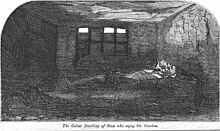
"The occupation of the underground rooms here, as well as elsewhere, is illegal, and may at once be prevented. Under the Local Management Act, as our readers may remember, an underground room may not be occupied separately as a dwelling unless certain conditions are complied with, one of which is that there shall be a window of specified size, with an area before it open down to 6 inches below the floor of the room... One of the worst examples that we saw of these underground rooms we must endeavour to illustrate. It is in Nichol-street, No.59, and may be described as entirely below the surface. the window of the apartment is a little over 3 feet in width, and about the same in height; the area is even with the breadth and depth of the window. It extends from the wall about 2 feet, and was closed with an iron grating; but this having become broken, the entire top of the area has been covered with wood, so that the only means of light and ventilation is a chink 3 feet wide by 4 and a half inches in height. Passing through the passage to the back, the dilapidated condition of the premises, as may be seen in the sketch, is startling. The plaster has fallen from the walls and the ceilings, the narrow staircase is rotten and shaky, the general colour is of a dingy smoky black, with peeps of indifferent brickwork and broken laths. At the back there is a large open space, in a most filthy condition; damp refuse of all kinds is piled up against the wall; there is no supply of water;"[10]

"A Cellar dwelling in Nichol Street", illustration for "More Revelations of Bethnal Green", published in The Builder, vol. XXI, no. 1082 (31 October 1863)
The Old Nichol was a Cockney enclave, with second and third generation Londoners forming the majority of inhabitants of the slum. Over a third of London's four million inhabitants had been born outside the city, but this figure dipped to an eighth in the Old Nichol, the lowest figure for any part of London. The Old Nichol, like the 129,000 inhabitants of Bethnal Green, was in the late 1880s largely homogeneous, although there was a significant number of settled and half settled Irish gypsy, known as "didikai", and Romany families, and judging from the surnames, descendants of Huguenot settlers.[12] The rotten housing stock of the Old Nichol was the only type of property the very poorest could afford. The surviving Poor Law case histories for the area show that the Old Nichol was for many East End Londoners the final stop before entering into workhouses.[14]
The Old Nichol was locally known as "The Sweaters' Hell", in references to the prevalence of home-based artisan work that paid little among Old Nichol inhabitants. Work was plentiful, but pay was poor and wages got lower. Hundreds of Old Nichol inhabitants made couches, chairs, mirrors and toys, or worked as sawyers, carvers, french polishers, ivory turners and upholsterers, with their tiny homes doubling as workshops. The Old Nichol had several timber yards and on weekdays the streets of the Old Nichol saw carts and barrows carry newly sawn planks and freshly turned furniture components. Finished tables, chairs and wardrobes were sold to the local wholesaler.[15] Close to the Old Nichol were Shoreditch's Curtain Road furniture depots and wholesale emporia. The proximity to the London Docks, which required vast amounts of casual, ill-paid labour, made the Old Nichol home to low-paid labourers. Street sellers also lived in the Old Nichol, which was ideally situated just outside the City of London boundaries, a 15-minute walk from Liverpool Street station and a 25-minute walk from the BankMansion House, and Guildhall.[16]
In 1863 an article in The Illustrated London News described the living and working conditions in the Old Nichol:
"In the neighbourhoods where the inhabitants follow poor trades the condition is but little better: a few streets where there is a more cleanly appearance do but lead to a repetition of the horrors just witnessed; and from garret to cellar whole families occupy single rooms, or, if they can find a corner of available space, take a lodger or two. In some wretched cul de sac, partly inhabited by costers, the fetid yards are devoted to the donkeys, while fish are cured and dried in places which cannot be mentioned without loathing. Bandbox and lucifer-box makers, cane workers, clothespeg makers, shoemakers, and tailors, mostly earning only just enough to keep them from absolute starvation, swarm from roof to basement; and, as the owners of such houses have frequently bought the leases cheaply and spend nothing for repairs, the profits to the landlords are greater in proportion than those on a middle-class dwelling."[
Whooping cough, which killed more children under the age of five than any other transmittable illness, scarlet feverdiphtheriameaslessmallpoxbronchitis and especially tuberculosis had a fatality rate in the Nichol that was twice as high as that in Bethnal Green, at that time a very poor East London parish. While the contagion rate in the Old Nichol was not higher than in Bethnal Green, inhabitants of the Old Nichol were less likely to recover. Contemporary medical thinking linked the health statistics of the Old Nichol to the overcrowding, lack of sanitary fittings, pervasive damp, and lack of light and fresh air.[17]
In the late 1880s the annual mortality rate in the Old Nichol was 40 per 1,000 people, with Bethnal Green's being between 22 and 23 per 1,000 people, and the national average being 19 to 20 per 1,000 people. Four-fifths of the around 5,700 inhabitants of the Old Nichol were children[2] and the death rate of babies under the age of one was 252 per 1,000 live births, compared to Bethnal Green's death rate of 150 per 1,000 live births, which was in line with average death rates in England and Wales.[17] It 1887 the coroner in Bethnal Green reported that around five out of six infant deaths investigated by the coroner were found to be suffocation cases in one-room homes where the entire family had slept in one bed. The cause of deaths was described as "overlaying", with a sleeping parent or older child rolling on top of the infant and accidentally killing it. The press at the time noted that such deaths were more common on Friday, Saturday and Sunday nights, suggesting that heavy drinking was a factor in the fatalities.[18]

How Tuberculosis Shaped Victorian Fashion...

By Emily Mullin

Image result for images of victorian darkness

Marie Duplessis, French courtesan and Parisian celebrity, was a striking Victorian beauty. In her best-known portrait, by Édouard Viénot, her glossy black hair frames a beautiful, oval face with sparkling eyes and ivory skin. But Duplessis’ fame was short-lived. Like Violetta, the protagonist in Giuseppe Verdi’s opera La Traviata whose tale Duplessis inspired, Duplessis was afflicted with tuberculosis, which killed her in 1847 at the age of 23.
By the mid-1800s, tuberculosis had reached epidemic levels in Europe and the United States. The disease, now known to be infectious, attacks the lungs and damages other organs. Before the advent of antibiotics, its victims slowly wasted away, becoming pale and thin before finally dying of what was then known as consumption.
The Victorians romanticized the disease and the effects it caused in the gradual build to death. For decades, many beauty standards emulated or highlighted these effects. And as scientists gained greater understanding of the disease and how it was spread, the disease continued to keep its hold on fashion.
“Between 1780 and 1850, there is an increasing aestheticization of tuberculosis that becomes entwined with feminine beauty,” says Carolyn Day, an assistant professor of history at Furman University in South Carolina and author of the forthcoming book Consumptive Chic: A History of Fashion, Beauty and Disease, which explores how tuberculosis impacted early 19th century British fashion and perceptions of beautyDuring that time, consumption was thought to be caused by hereditary susceptibility and miasmas, or “bad airs,” in the environment. Among the upper class, one of the ways people judged a woman’s predisposition to tuberculosis was by her attractiveness, Days says. “That’s because tuberculosis enhances those things that are already established as beautiful in women,” she explains, such as the thinness and pale skin that result from weight loss and the lack of appetite caused by the disease.
The 1909 book Tuberculosis: A Treatise by American Authors on Its Etiology, Pathology, Frequency, Semeiology, Diagnosis, Prognosis, Prevention, and Treatment confirms this notion, with the authors noting: “A considerable number of patients have, and have had for years previous to their sickness, a delicate, transparent skin, as well as fine, silky hair.” Sparkling or dilated eyes, rosy cheeks and red lips were also common in tuberculosis patients—characteristics now known to be caused by frequent low-grade fever.
“We also begin to see elements in fashion that either highlight symptoms of the disease or physically emulate the illness,” Day says. The height of this so-called consumptive chic came in the mid-1800s, when fashionable pointed corsets showed off low, waifish waists and voluminous skirts further emphasized women’s narrow middles. Middle- and upper-class women also attempted to emulate the consumptive appearance by using makeup to lighten their skin, redden their lips and color their cheeks pink.
The second half of the 19th century ushered in a radically transformed understanding of tuberculosis when, in 1882, Robert Koch announced that he had discovered and isolated the bacteria that cause the disease. By then, germ theory had emerged. This is the idea that microscopic organisms, not miasmas, cause certain diseases. Koch’s discovery helped germ theory gain more legitimacy and convinced physicians and public health experts that tuberculosis was contagious.
Preventing the spread of tuberculosis became the impetus for some of the first large-scale American and European public health campaigns, many of which targeted women’s fashions. Doctors began to decry long, trailing skirts as culprits of disease. These skirts, physicians said, were responsible for sweeping up germs on the street and bringing disease into the home.
Consider the cartoon "The Trailing Skirt: Death Loves a Shining Mark," which appeared in Puck magazine in 1900: The illustration shows a maid shaking off clouds of germs from her lady’s skirt as angelic-looking children stand in the background. Behind the maid looms a skeleton holding a scythe, a symbol of death.
Corsets, too, came under attack, as they were believed to exacerbate tuberculosis by limiting the movement of the lungs and circulation of the blood. “Health corsets” made with elastic fabric were introduced as a way to alleviate pressure on the ribs caused by the heavily boned corsets of the Victorian era.fibr of Congress)
Men’s fashion was also targeted. In the Victorian period, luxuriant beards, sculpted mustaches and extravagant sideburns had been all the rage. The trend can be partly credited to British soldiers who grew facial hair to keep warm during the Crimean War in the 1850s. But facial hair was also popular in the United States where razors were difficult to use and often unsafe, especially when not cleaned properly. But by the 1900s, beards and mustaches themselves were deemed dangerous.
“There is no way of computing the number of bacteria and noxious germs that may lurk in the Amazonian jungles of a well-whiskered face, but their number must be legion,” Edwin F. Bowers, an American doctor known for pioneering reflexology, wrote in a 1916 issue of McClure’s Magazine. “Measles, scarlet fever, diphtheria, tuberculosis, whooping cough, common and uncommon colds, and a host of other infectious diseases can be, and undoubtedly are, transmitted via the whisker route.”
By the time Bowers penned his spirited essay, facial hair had largely disappeared from the faces of American men, especially surgeons and physicians, who adopted the clean-shaven look to be more hygienic when caring for patients.
The Victorian ideal of looking consumptive hasn’t survived to the current century, but tuberculosis has had lingering effects on fashion and beauty trends. Once women’s hemlines rose a few inches at the beginning of the 1900s, for example, shoe styles became an increasingly important part of a woman’s overall look. And around the same time, doctors began prescribing sunbathing as a treatment for TB, giving rise to the modern phenomenon of tanning. 

Aubrey Beardsley, - Victorian Illustrator...

Aubrey Beardsley Short Bio

Born to middle-class parents in 1872, Aubrey Beardsley grew up beneath the looming shadow of tuberculosis. Perhaps it was that threat of early demise which created from a frail and awkward young man a manically prolific artist who, despite his brief 26 years, managed to carve out for himself not only a place amidst the artistic bohemian elite of the time but a permanent niche amidst the revolutionaries of art.
Although he received what amounted to almost no training in art, Beardsley's first assignment came early in life with Malory's Le Morte D'Arthur, a popular version of the Arthurian legends.
The young artist was still enamored with his Pre-Raphaelite idols and heavily applied to the illustrations Burne-Jones' medieval thoughtfulness, delicate profiles, and intricate scroll-work. Yet already his chapter headings were populated with dumb-founding cameo appearances from satyrs, nymphs, and other woodland creatures most certainly not of Arthurian origin. Further, his idea of an adventurous knight was not that of a bearded, burly male but of a slender, effeminate youth.
The illustrations, despite their caprices, were well-received and young Aubrey's portfolio didn't go unnoticed by critics and peers alike. His Parisian connection with Oscar Wilde's circle of acquaintances lead to the creation of a series of drawings for Salome, Wilde's only play written in French. Already dismissive of his early English mentors and taken by the delicate art of Japan so popularized by James McNeill Whistler, Beardsley fled the medieval wood for flat and nearly abstract arrangements of sensuous figures: all this much to the annoyance of the play's author, who requested "Byzantine" drawings and was probably equally unimpressed with Aubrey's caricatures of Wilde (among them the round face of the full moon and Herod's court jester with a copy of the play in hand).
Reputation for such "naughtiness" didn't prevent Aubrey from being sought after by the Yellow Book, a printed outlet for some of the most brilliant literary minds of the time (such as Yeats and Henry James). His editorial assignment quickly ended when, in 1895, the Wilde scandal broke. Beardsley, though friends with many of the famous homosexuals of his time, was never involved in the blackmail and prostitution which eventually sealed Wilde's fate. He was nonetheless relieved of his duties at the Yellow Book.
In 1895, with time fleeting from the young consumptive, Aubrey took to conquering the literary world. Despite his diligence he managed to create only three poems, as well as Under the Hill, an unfinished novel about a dandy who travels into a decadent underworld presided over by Venus herself. In a language as extravagant as his drawings, he recounts the adventures of Tannenhauser in Venusburg, with characters such as the lusty aging chaperone, a rather desperate unicorn and a cast of various ardent fetishists.
As months passed, the unfortunate association with Wilde was forgotten and Aubrey took a position at The Savoy, where he brought his ingeniousness to such ouvres as Les Liasons Dangereuses and Das Rheingold. In the same years he also took to illustrating two literary works which would showcase the range of his style: The Rape of the Lock by Alexander Pope and Lysistrata by Aristophanes. The former presented Beardsley's characteristic line work at its complex best. The latter payed homage to its ability to be ingeniously simplistic yet faithful to the narrative and the nature of the literary text. Pope's satire is reflected in the effervescent dotted line which scrolls into the wealthy costumes and furnishings of the 18th century setting. The privately printed Lysistrata is truthful not only to the barren backdrops of Greek comedy but also to its original vulgar humour of giant codpieces worn by the actors to convey the frustration of Athenian men over the women's sex strike.
Over the brief years of his career, Beardsley's notoriety grew and caricatures as well as critiques of his style appeared everywhere. He seemed to have a weakness for sneaking lewd grotesques into every dark corner of his illustrations; his women sported large, smirking mouths, wanton and outrageous to the contemporary onlooker. His no-shading style, ideal for eye-catching advertisements and incredibly fresh in its time, was vastly imitated. Nicknames such as Baudry Weirdsley were assigned and various absurd tales about the odd-looking youth multiplied. One claimed that Aubrey could only work by a solitary candle, with windows shut out by thick black curtains, in a room painted completely black.
Regardless, Beardsley unquestionably created not only a revolution of line but of thought as well. His bluntness posed frustration because it did not compromise beauty; and in a time when a woman's allure lay in her passivity, he stubbornly portrayed her as a free thinking, sexually complex, and even dominating figure.
Beardsley's last months were devoted to his literary passions. Among his final illustrations were those for The Forty Thieves and Volpone. Following in the example of many decadent artists of his day such as Paul Verlaine and J.K. Huysmans, the dying Aubrey converted to Catholicism. Tuberculosis claimed him in 1898.
Source: Alex Goluszko